
Nutrition & Supplements
Colostrum for Athletes: What the Research Supports
A practical look at gut health, respiratory symptoms, recovery, dosing and the limits of colostrum research.
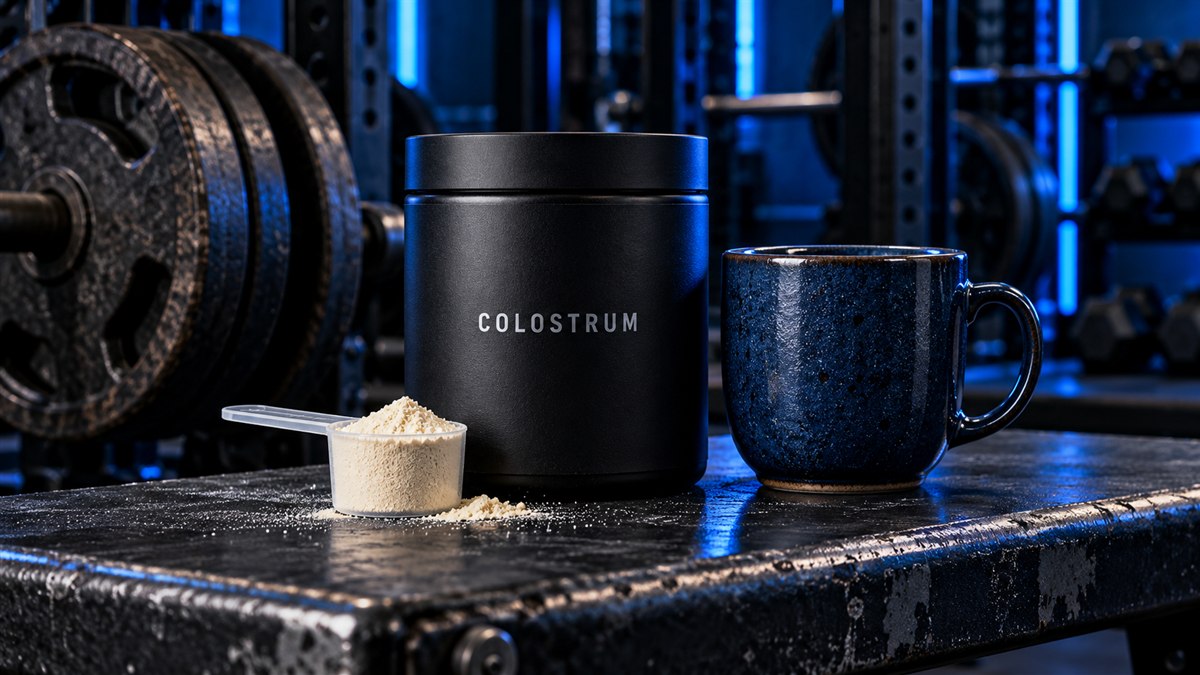
The practical take.
- What it may help with
- Understand the research on gut-barrier measures and respiratory symptoms in exercising adults.
- What the evidence supports
- Findings vary by study, dose and product; laboratory markers do not guarantee better symptoms or performance.
- Joel’s approach
- Treat it as optional, follow product guidance and review the dairy-allergy and tested-sport considerations below.
Colostrum gets talked about as a supplement for gut health, immunity, recovery and muscle. I think it deserves a closer look—but the practical advice needs to stay connected to what researchers actually measured.
What is colostrum?
Colostrum is the early milk produced after birth. Most supplements use bovine colostrum, which comes from cows. It contains proteins, fats and other nutrients, along with immunoglobulins such as IgG, lactoferrin and growth factors. The amounts vary with collection and processing.
That biology makes it interesting. It does not mean an adult who drinks colostrum receives the same benefits as a newborn calf. Some components may act within the digestive tract, and swallowing bovine antibodies should not be described as directly replenishing antibodies in an adult’s bloodstream. A systematic review of human applications provides useful background.
Gut health: a promising area, with limits
Hard exercise, particularly prolonged exercise in heat, can place stress on the gut. Researchers have investigated whether colostrum changes measures of intestinal permeability—how readily substances cross the intestinal barrier.
A 2024 meta-analysis of randomized trials found improvements in two urinary sugar-ratio measures of permeability. However, the studies differed substantially, especially for one of those measures, and the analysis did not find a significant improvement in intestinal fatty acid-binding protein, a marker associated with intestinal injury.
A better laboratory marker does not automatically mean less bloating, fewer stomach problems or better recovery. Those outcomes need to be measured directly. The findings justify more research; they do not establish colostrum as a treatment for gastrointestinal disease.
My practical takeaway: gut-barrier research is a reasonable reason to be interested. Persistent pain, diarrhea or other digestive problems still deserve proper evaluation rather than a supplement experiment.
What does the respiratory research show?
A 2016 systematic review and meta-analysis pooled five trials involving 152 people who exercised regularly. Over eight to 12 weeks, colostrum was associated with approximately 44% fewer upper-respiratory-symptom days and 38% fewer symptom episodes relative to placebo.
Those are relative reductions in the pooled rates—not a promise that your personal chance of getting sick falls by those amounts. Symptoms were self-reported, and they were not necessarily caused by laboratory-confirmed infections. Four of the five trials had moderate or high overall risk of bias, based on the review’s assessment.
The included trials used 10–20 grams daily. Their findings cannot simply be transferred to a different product’s 3-gram serving. The 20-gram, 12-week trial sometimes quoted separately is already included in this review.
I would describe this as promising evidence about respiratory symptoms in exercising adults. Calling it proven infection prevention or a guaranteed “immune boost” goes beyond what these studies establish.
Recovery, performance and muscle
A small six-week trial in soccer players used 3.2 grams daily and reported benefits in some muscle-damage-related measures and recovery of explosive power after demanding intermittent exercise. It involved only 18 participants. That is interesting, but it does not validate every low-dose product or every claimed benefit.
The broader sport and exercise review describes mixed performance and body-composition findings. Some studies used comparison products that were not closely matched for nutritional content, which makes the effects harder to interpret.
There isn’t convincing evidence to recommend colostrum specifically for muscle growth.
For lifters, my priorities remain a sensible training program, sufficient food and protein, and good sleep. An optional supplement should have a clear purpose and fit the budget after those basics are covered.
How much should you take?
There is no scientifically established universal dose. Studies have used different products, amounts, durations and outcomes. A dose investigated for one recovery measure cannot automatically be recommended for gut symptoms or respiratory illness.
IgG concentration can help describe a product, but it does not establish that a smaller, higher-IgG serving is clinically equivalent to a larger research dose. Colostrum contains many components, and processing can affect them.
I would not tell someone to increase the serving just to match a paper. If you choose to try it, follow the product directions and discuss suitability with a qualified clinician when needed.
You could keep a simple record of your digestive symptoms, training and tolerance over several weeks. Six to eight weeks can be a personal review point.
Timing, mixing and heat
I would keep the routine simple. The research discussed here does not establish an ideal time of day or prove that an empty stomach is superior. Follow the label rather than assuming there is a special pre-workout or post-workout window.
Cool or room-temperature water is an easy mixing option. Use a food or drink permitted by the product directions if that makes it easier to take. There is no need to add several other gut supplements at once; doing so makes it harder to judge tolerance or identify what changed.
Heat and processing can affect colostrum proteins. Follow the manufacturer’s preparation instructions and avoid assuming that a temperature recommendation proves a clinical benefit. A simple cool drink avoids that complication.
Safety, IGF-1 and tested sport
Colostrum is dairy-derived. People with a cow’s-milk protein allergy should avoid it. Lactose content and individual tolerance vary; digestive discomfort is possible. Human studies do not establish safety for every population or indefinite use. Discuss use during pregnancy or breastfeeding, for a child, or alongside significant medical conditions or medications with a qualified healthcare professional. Bovine colostrum is not a replacement for breast milk or infant formula. Human research overview.
Colostrum contains growth factors, including IGF-1. The balance of research reviewed in the sport review does not support a consistent increase in circulating IGF-1 after oral supplementation. That finding alone does not prove overall safety or freedom from anti-doping risk.
USADA flags colostrum because it can contain IGF-1, a prohibited substance, and warns that natural products can create anti-doping uncertainty. This is not the same as saying every colostrum product is itself explicitly banned. Tested athletes should consult their anti-doping organization before use. Sport-specific certification can reduce supplement risk, but it cannot guarantee a negative test.
Where I think it fits
Colostrum is worth discussing because there are real human studies behind some of the claims. Gut permeability and respiratory symptoms are the most interesting areas covered here. Direct improvements in strength, muscle and performance are less certain.
Research & References
- Intestinal permeability: meta-analysis of randomized trials (2024).
- Upper respiratory symptoms during exercise training: systematic review and meta-analysis (2016).
- Low-dose colostrum and recovery after intermittent exercise in soccer players (2018).
- The Use of Bovine Colostrum in Sport and Exercise (2021).
- Bovine Colostrum Applications in Sick and Healthy People: A Systematic Review (2021).
- USADA: natural products derived from plants and animals.
- Equip Core Colostrum product information and manufacturer IgG information. Product information is separate from research evidence.
Published October 4, 2026. This article is educational and is not medical advice. It does not recommend colostrum to diagnose, treat, cure or prevent disease.
Equip sponsors Grip & Grub. My product recommendation is separate from the research evidence discussed above.
If you want to try colostrum, check out Equip Colostrum using my link and use code JOEL at checkout.
Shop Equip · Code JOEL