Nutrition & Supplements
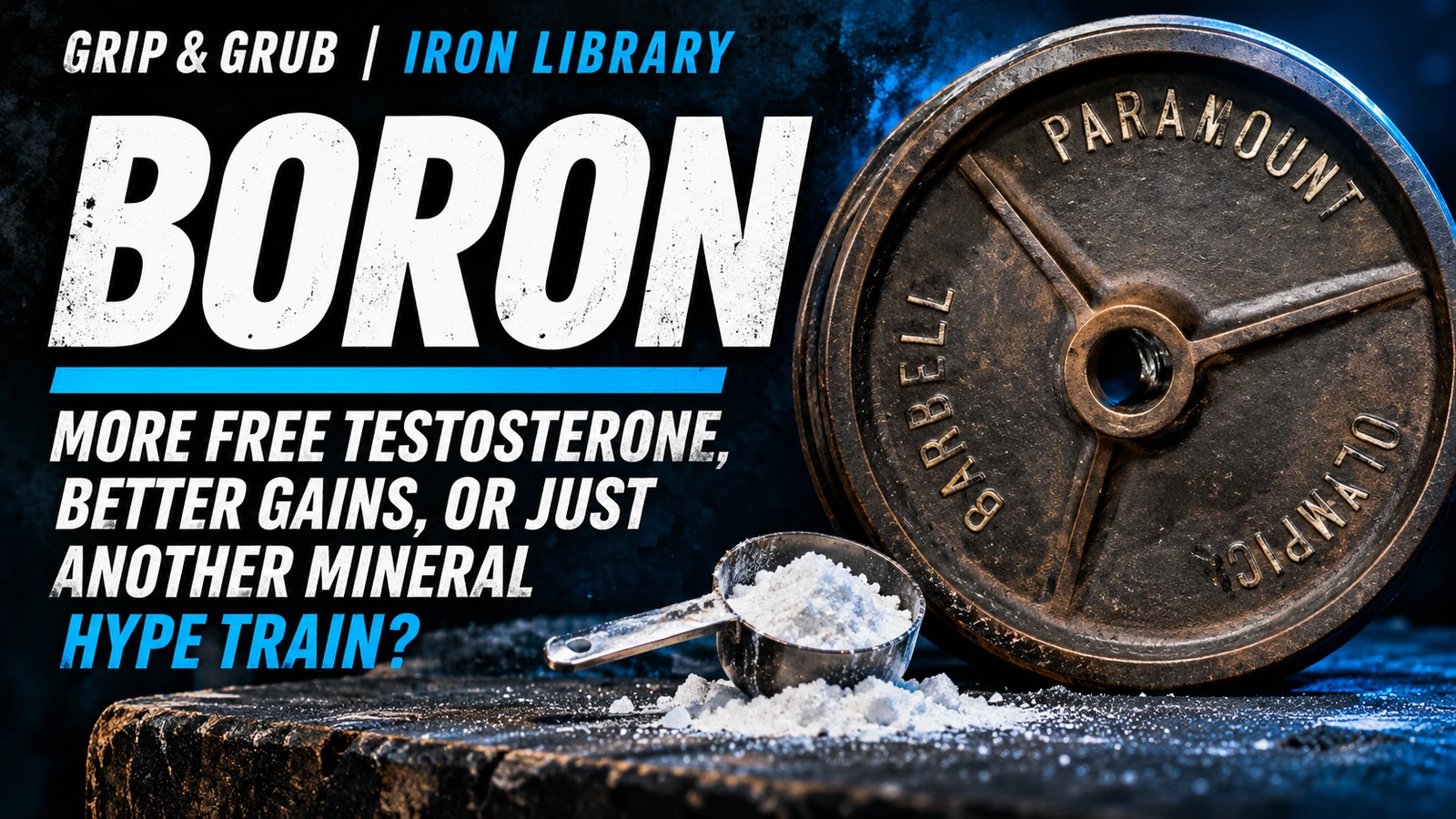
Boron: More Free Testosterone, Better Gains, or Just Another Mineral Hype Train?
Does boron actually boost free testosterone or improve strength? A research-based breakdown of SHBG, bodybuilder trials, food sources, and safety.
The practical take.
- What it may help with
- Interesting short-term hormone signals, with no established extra strength or muscle-building benefit for lifters.
- What the evidence supports
- The eight-man hormone study and nineteen-man bodybuilding trial used different designs and doses. Blood markers are not proof of better training outcomes.
- Joel’s approach
- Start with food. Adult upper limits include food and supplements together; they are safety ceilings, not dose targets. Never take household borax or boric acid as a supplement.
Read full guide & sources
Is this tiny mineral a hidden testosterone hack, or is supplement marketing getting ahead of the science?
Every supplement label seems to have a new trick for boosting testosterone. These days, even a trace mineral can apparently turn you into a walking PR machine.
Enter boron. You've probably seen it promoted for raising free testosterone, lowering SHBG, helping vitamin D, and building stronger bones. Sounds like a pretty solid deal for one little capsule.
But I've been around the weight room long enough to know the difference between an interesting lab result and putting more plates on the bar. So I dug into the human research. Here's what I found.
What Is Boron?
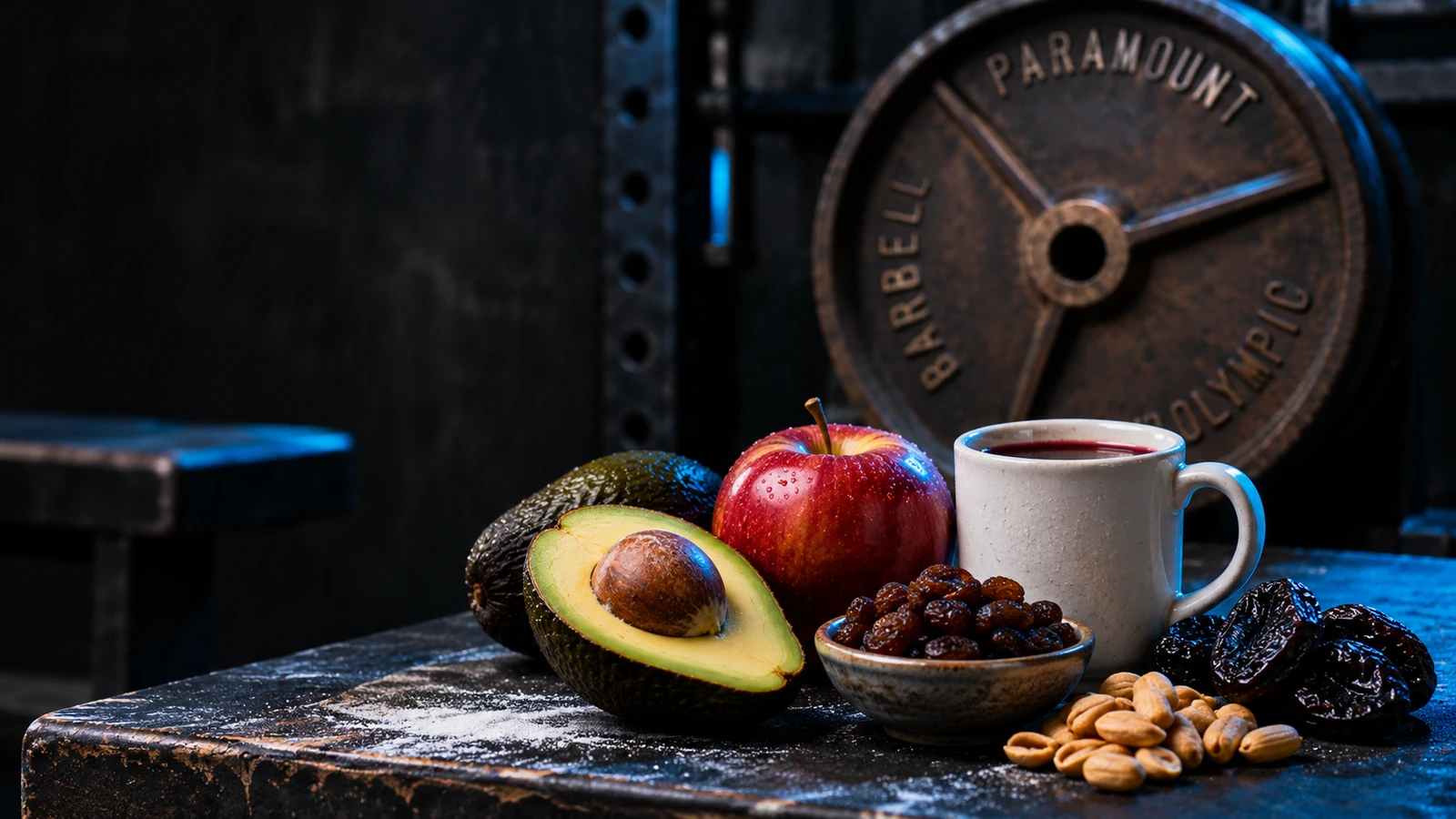
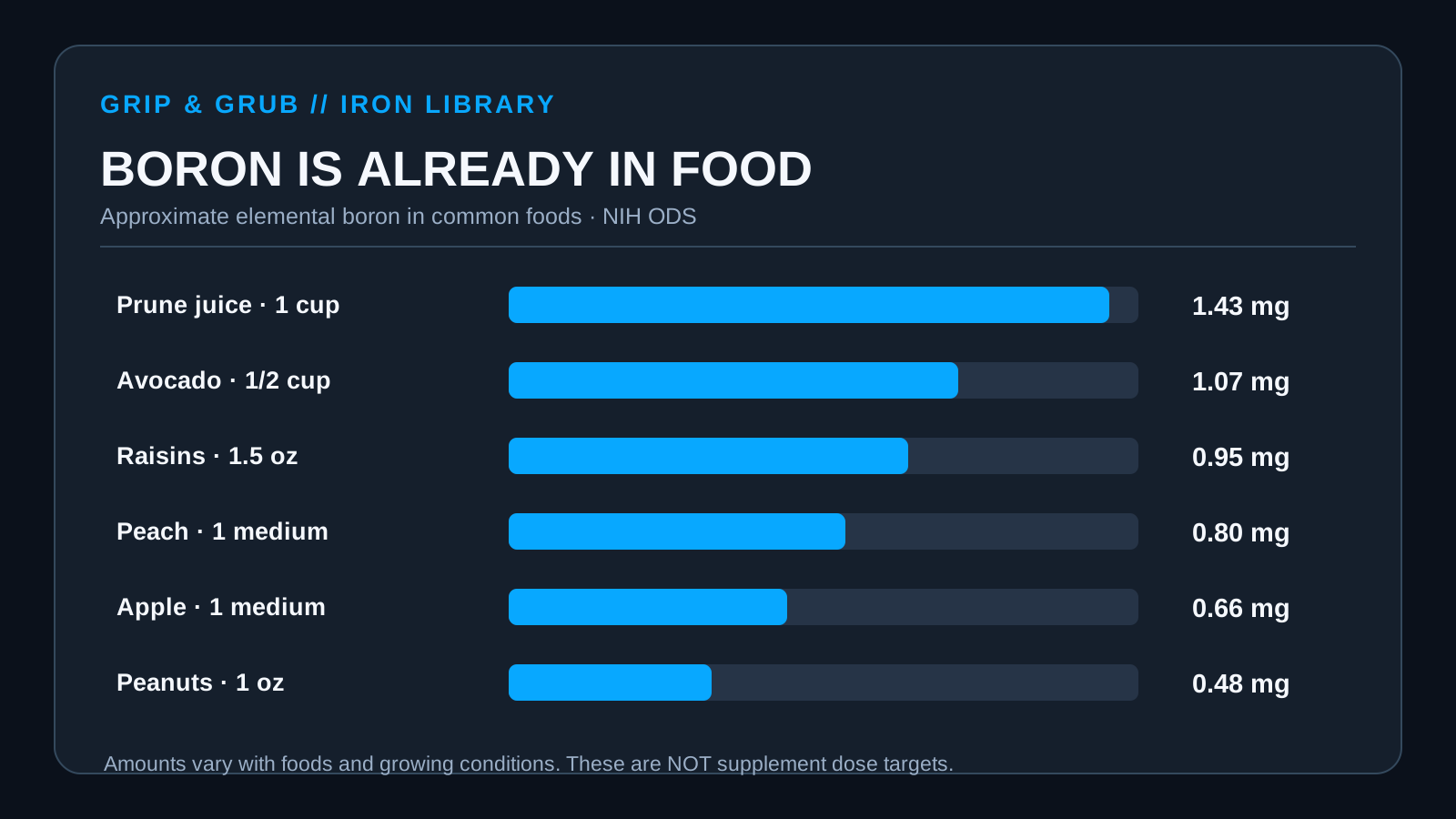
Boron is a trace element found in everyday foods, especially avocados, raisins, prunes, apples, peanuts, and beans. Researchers are investigating its role in mineral metabolism, hormone signaling, and bone health.
Here's a surprise: boron isn't officially classified as an essential nutrient for humans, and there's no established Recommended Dietary Allowance (RDA). That doesn't mean it's useless. It means we haven't demonstrated an indispensable human function or worked out exactly how much people need.
Does Boron Actually Boost Testosterone?
This is where the hype starts. Andrew Huberman and Dr. Kyle Gillett have discussed boron as something that might temporarily lower SHBG, or sex hormone-binding globulin. SHBG binds some of the testosterone circulating in your blood. If it changes, the amount measured as free testosterone may change too.
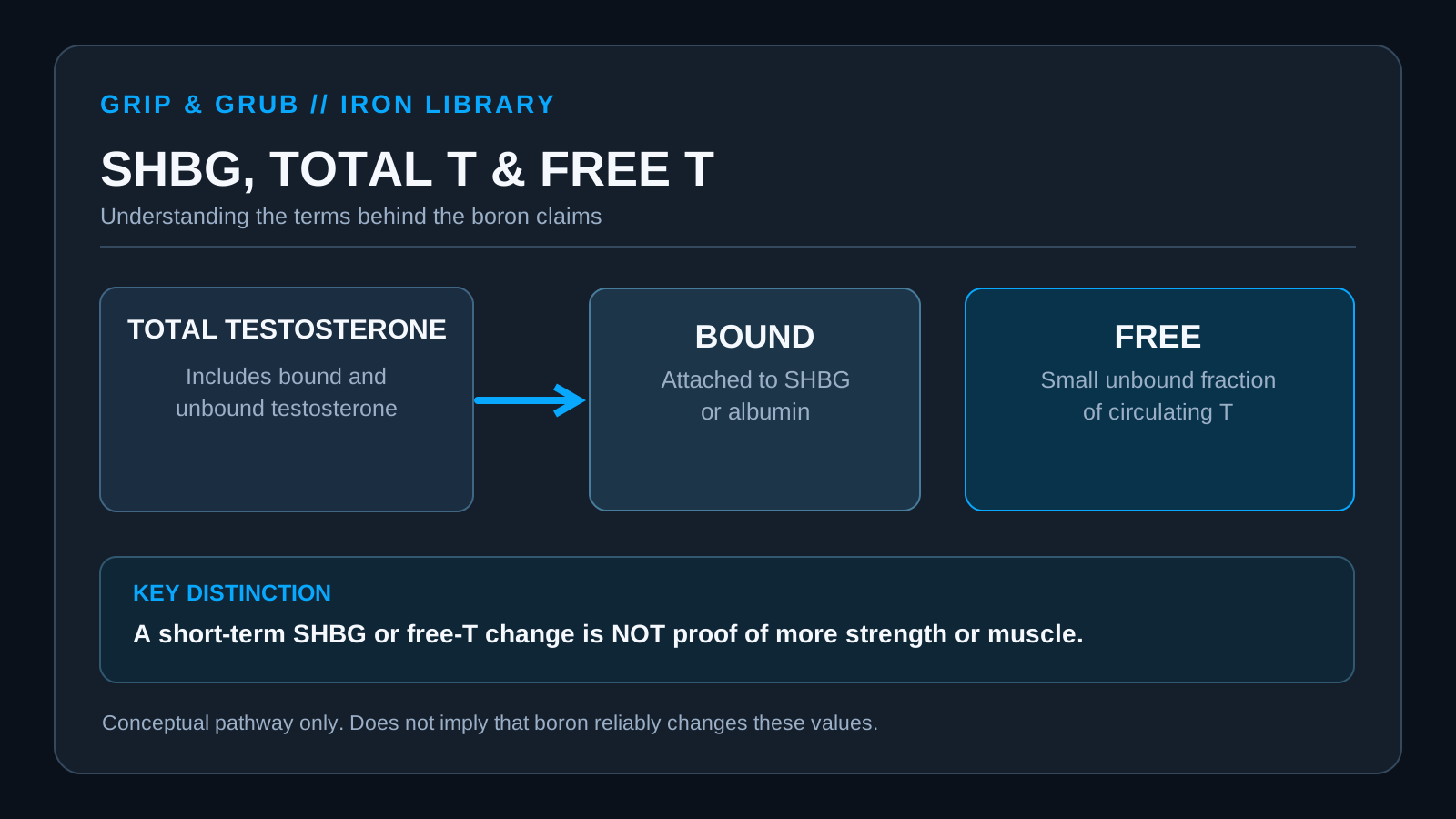
The study everybody points to? Eight healthy men took 10 mg of boron per day for seven days. Researchers observed an acute drop in SHBG and higher average free testosterone after a week.
Interesting? Absolutely. But we're talking about eight people, seven days, and blood markers. There wasn't a parallel placebo group for the full week, and nobody tested how many extra reps they could grind out.
Then there's the much more relevant bodybuilding study. Nineteen men received 2.5 mg of boron or placebo daily for seven weeks while training. Both groups improved strength and lean mass, but boron provided no statistically significant extra benefit for testosterone, squats, bench press, or body composition.
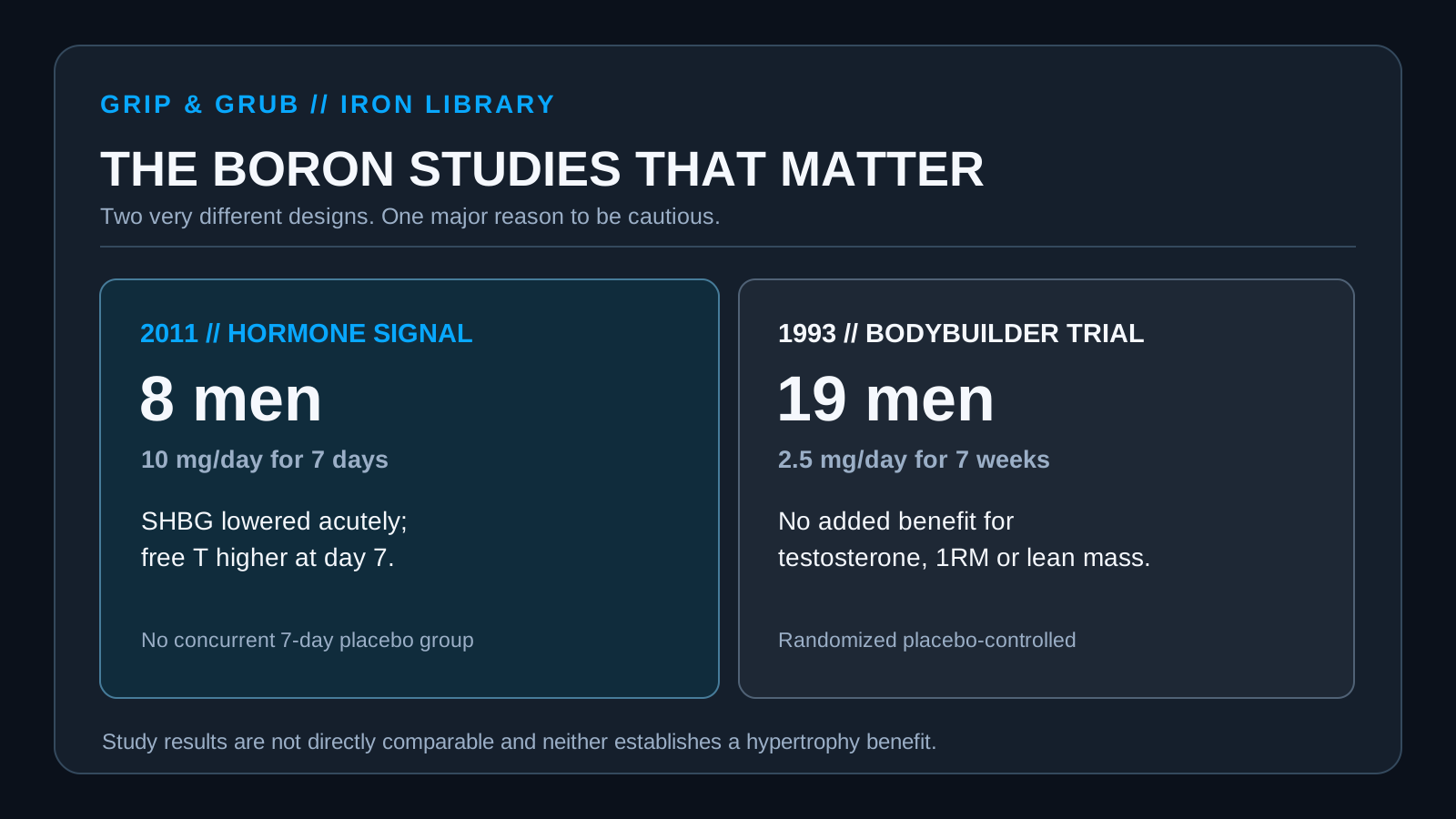
My translation: Changing a hormone measurement isn't the same as adding 50 pounds to your deadlift. If boron reliably built muscle, I'd want to see that in actual training trials—not just in a blood test.
What About Vitamin D, Bones, and Joints?
Boron appears to interact with pathways involved in vitamin D and mineral metabolism, and there's some early research on bone health. But we do not have convincing human evidence that a boron supplement improves bone density or fixes vitamin D deficiency in otherwise healthy lifters.
A few small studies of calcium fructoborate, a particular boron-containing compound, have reported improvements in knee discomfort. That's not proof that regular boron capsules rebuild cartilage, heal tendons, or speed recovery from heavy squats.
Interesting biology? Yes. A guaranteed recovery supplement? Not even close.
What the Research Actually Supports
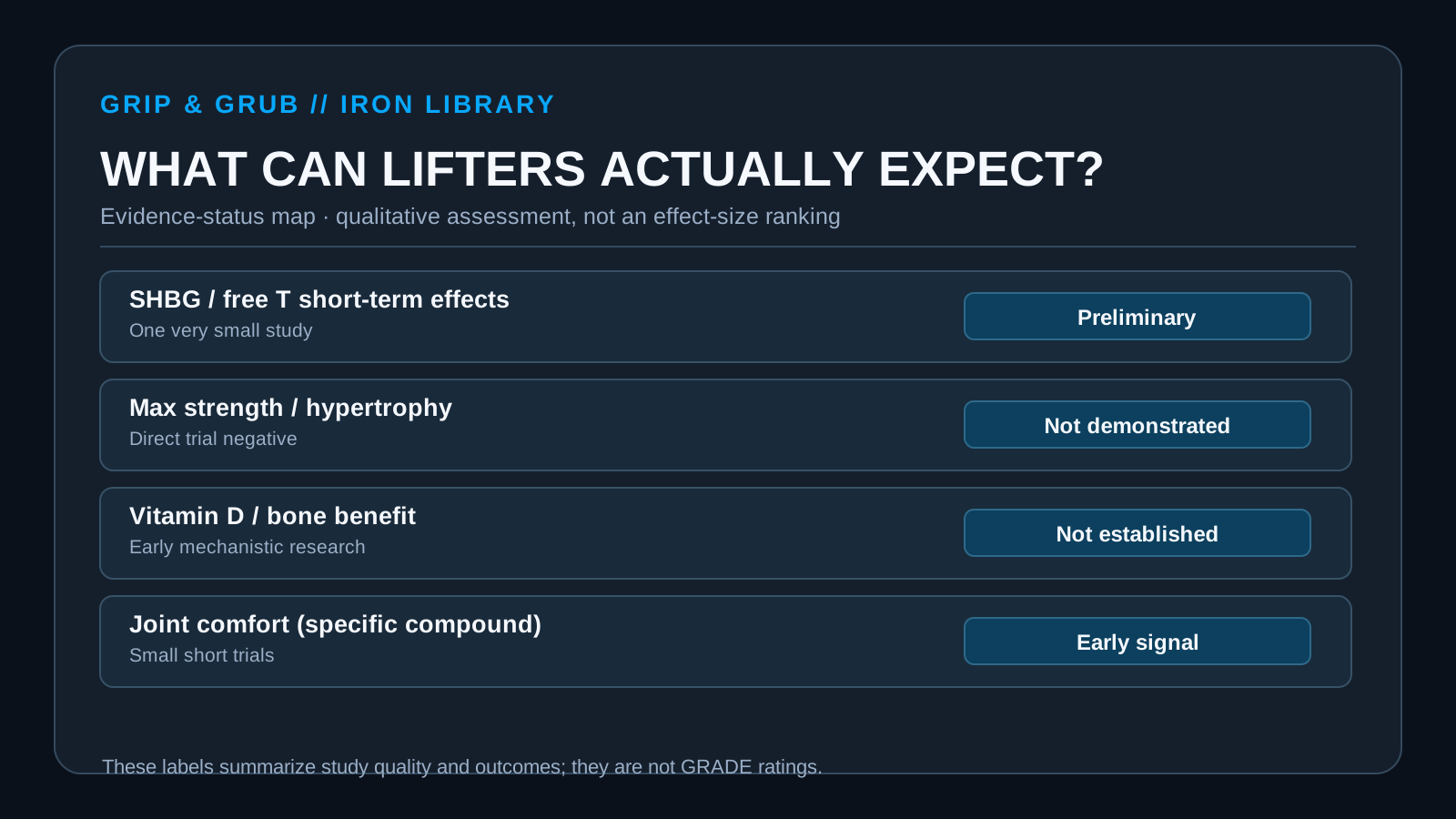
The strongest story isn't that boron is a testosterone supercharger. It's that we have some short-term hormone signals, limited research on mineral metabolism, and surprisingly little high-quality evidence showing benefits that matter to strength athletes.
A newer 2026 scientific review reached a similar conclusion: the mechanisms are interesting, but human trials are small, inconsistent, and often rely on surrogate measurements.
Athlete Action Plan: What About Dose and Timing?
Here's how I'd approach it without pretending we've cracked the code.
- Food first. Avocados, fruit, raisins, beans, and nuts are easy ways to get boron as part of a solid diet.
- Know the research doses. Studies have examined roughly 2.5–10 mg daily, but that is not a proven muscle-building dose or a general recommendation.
- No magic pre-workout window. There's no good evidence that taking boron before training improves your workout.
- Don't chase SHBG alone. If you're concerned about testosterone, get an appropriate medical evaluation. One blood marker never tells the whole story.
- Check your labels. Multivitamins and blended products can already contain boron. Count elemental boron, not the total weight of the compound.
- No proven cycling trick. Taking it five days on and two off, or cycling it with another testosterone booster, hasn't been shown to improve strength or safety.
Safety: More Isn't Better
The U.S. adult upper limit is 20 mg/day, while the European adult upper limit is 10 mg/day. Both include boron from food and supplements combined. These are safety ceilings, not dose targets.
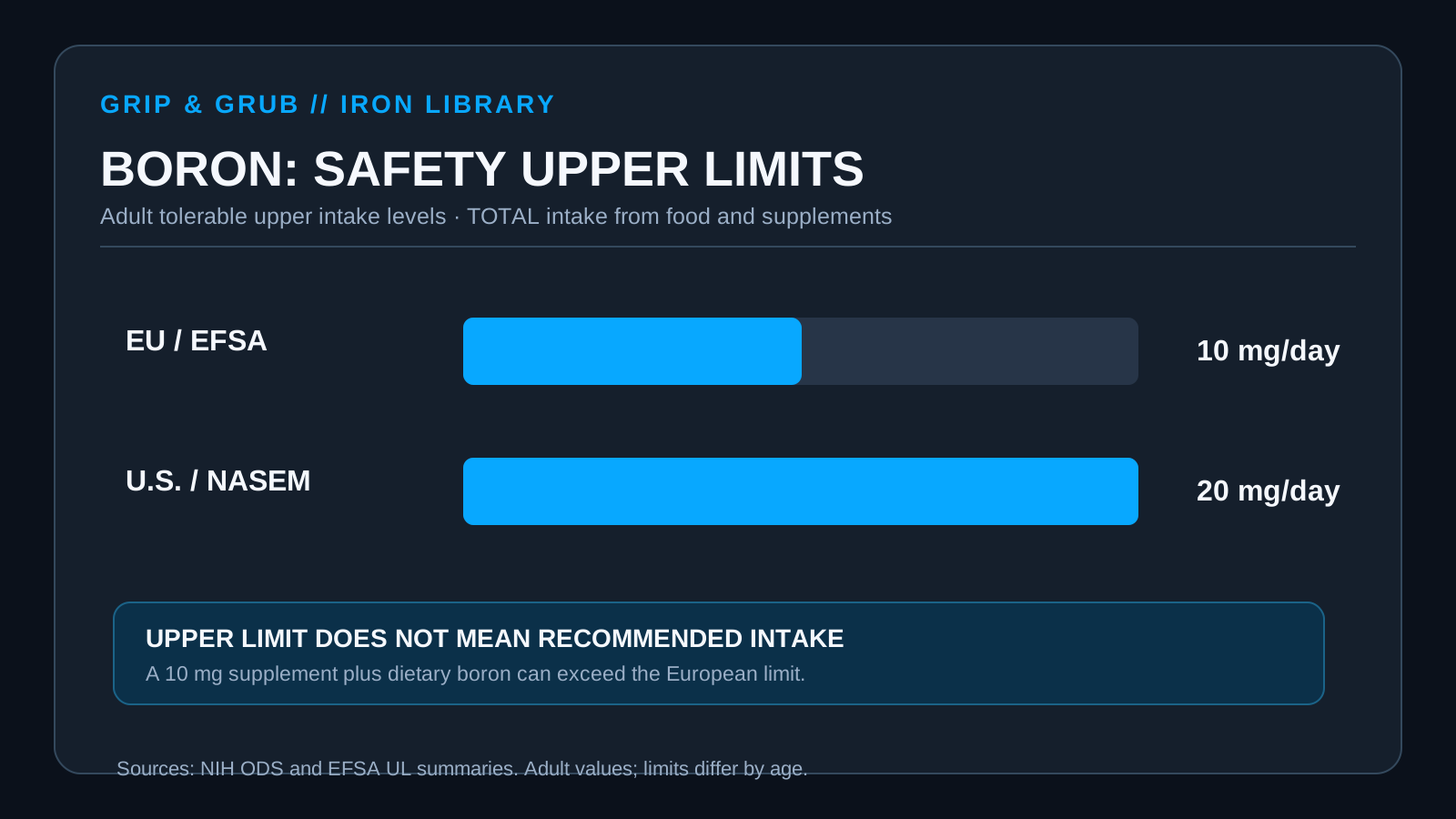
Excessive boron exposure can cause nausea, vomiting, diarrhea, and other serious problems. People with kidney issues should be especially cautious about supplemental intake. And absolutely do not take household borax or boric acid as a supplement. Those aren't gym supplements, no matter what somebody online claims.
My Take
Boron is worth studying. I don't think it's worth pretending the science is settled.
If you eat a decent variety of foods, train intelligently, sleep, hit your protein, and take creatine when appropriate, you're already doing more for your performance than you will by blindly chasing an SHBG number.
Until bigger, better trials show meaningful increases in strength or muscle, I'm not putting boron in the same category as creatine.
Your bloodwork isn't a bench press. More numbers on a supplement label don't automatically mean more plates on the bar.
Train hard. Recover harder. Let the science do the talking.
— Joel
Research & References
- Huberman Lab / Dr. Kyle Gillett (original 2022; Essentials 2026). Hormone optimization discussion, including boron and SHBG. https://www.hubermanlab.com/episode/essentials-tools-for-hormone-optimization-in-males-kyle-gillett
- Naghii et al. (2011). Eight-man, seven-day boron and hormone study. https://pubmed.ncbi.nlm.nih.gov/21129941/
- Ferrando & Green (1993). Randomized bodybuilder trial assessing testosterone, strength, and lean mass. https://pubmed.ncbi.nlm.nih.gov/8508192/
- NIH Office of Dietary Supplements. Boron: Health Professional Fact Sheet, including food content, evidence, and safety. https://ods.od.nih.gov/factsheets/Boron-HealthProfessional/
- EFSA. Summary of tolerable upper intake levels for nutrients. https://www.efsa.europa.eu/sites/default/files/2024-05/ul-summary-report.pdf
- Tuzcu et al. (2026). Boron as a context-dependent physiological modulator: critical narrative review. https://pubmed.ncbi.nlm.nih.gov/42579050/
- Pietrzkowski et al. (2014). Calcium fructoborate and knee discomfort, randomized placebo-controlled pilot. https://pmc.ncbi.nlm.nih.gov/articles/PMC4051624/
This article is educational and is not a substitute for individualized medical advice.