Training & Recovery
Sleep Cold, Recover Strong: The Best Temperature for Muscle Recovery
A comfortably cool bedroom may help your sleep. Here’s how I approach temperature, bedding, and sleep habits without promising a muscle-building thermostat setting.
The practical take.
- What it may help with
- A comfortably cool bedroom may help you sleep better between demanding sessions.
- What the evidence supports
- Small mattress studies show mixed sleep-stage findings; they do not prove a thermostat setting builds muscle or restores strength.
- Joel’s approach
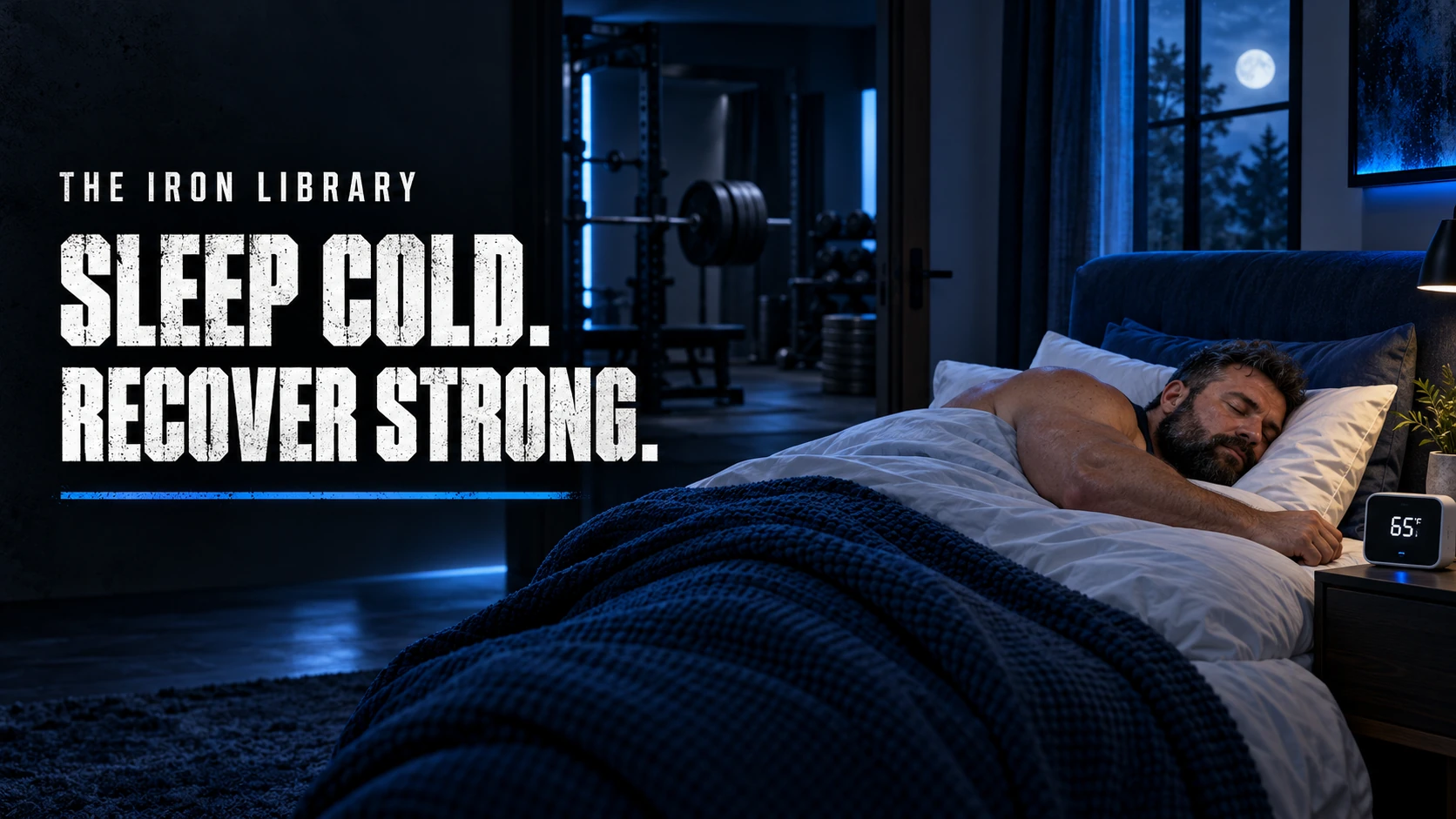
- My starting point is around 65°F, comfortable bedding, and enough sleep. Adjust to how well you actually rest.
You can train your ass off, eat all the protein you want, and take every recovery supplement on the market. But if your sleep sucks, you're leaving gains on the table.
One of the easiest recovery improvements might be something you haven't thought much about: your bedroom temperature.
What's the best temperature?
Sleep experts commonly suggest a bedroom around 60–67°F (about 16–19°C). That's a comfort starting range, not a scientifically proven prescription for every sleeper.
My recommendation? Start around 65°F (18°C) and adjust based on how well you sleep. That matches the practical guidance from Cleveland Clinic.
There's no scientifically proven magic temperature for muscle growth. A comfortably cool sleeping environment may help sleep quality, but room temperature, bedding, clothing, humidity, and personal preference all matter.
And for strength athletes, quality sleep matters.
Why sleeping cool helps recovery
Your body's core temperature naturally drops as you prepare for sleep. A comfortable bedroom and bedding can help you release heat without getting cold enough to shiver.
Here's why sleep matters for lifters:
- Deep sleep: A major growth-hormone pulse often occurs around early-night deep sleep. That normal physiology doesn't prove that lowering the thermostat increases muscle growth.
- Muscle recovery: Adequate sleep supports the recovery processes your body needs after heavy training.
- Nervous system and focus: Sleep supports attention, learning, and the mental readiness needed for demanding sessions.
- Performance: Poor sleep can hurt energy, focus, and your ability to perform in the gym. How much it affects a particular lift depends on the situation.
Basically, your muscles aren't the only things that need recovery. Your nervous system does, too. The 2021 athlete-sleep consensus emphasizes individual sleep needs rather than one universal athlete prescription.
What does the science say?
A 2024 study involving 54 adults compared sleep with temperature regulation on and off in a mattress cover. Among people using cooler settings in the first half of the night, men had about 14 minutes more deep sleep (22%), while women had about 9 minutes more REM sleep (25%), compared with the off condition.
Those are subgroup findings from part of the night—not guaranteed whole-night improvements for everyone. Across the active-cover condition, sleeping heart rate was lower and HRV was higher on average; those cardiovascular findings weren't a direct test of muscle repair.
Study context: Eight Sleep funded the research, and authors included company employees, shareholders, and paid consultants. It was a short free-living study of a particular mattress system, not a trial establishing an ideal bedroom thermostat setting.
A separate 2018 randomized crossover study in 15 healthy young men found more slow-wave sleep on a high-heat-capacity mattress. Again, that tested heat transfer at the bed surface, not muscle growth or an optimal room temperature.
And the results aren't universal. A 2024 study in 21 trained male endurance runners found no additional sleep benefit from a high-heat-capacity mattress topper during overload and taper periods compared with its control topper.
That's interesting for athletes, but here's the catch: these studies didn't establish better strength recovery or greater muscle growth. Bed-surface temperature and room temperature also aren't interchangeable.
So the practical message is to sleep comfortably cool. We can't claim turning down your thermostat automatically builds more muscle.
My athlete sleep protocol
Here's how I'd approach it for lifters, strongmen, and other strength athletes. This is my practical starting routine, not a proven optimal muscle-recovery protocol.
- Temperature: Start around 65°F and experiment within the 60–67°F range if comfortable. Adjust the room or bedding to your needs; don't chase a number at the expense of sleep.
- Sleep duration: I'd try to make room for 8–9 hours when possible, especially during heavy training blocks. Many adults need 7–9 hours, and individual athlete needs vary; judge whether you're rested rather than treating my target as a requirement.
- Bedding: Use breathable sheets and blankets. Don't trap yourself under a mountain of heavy bedding.
- Before bed: Try a comfortably warm shower 1–2 hours before sleeping if you find it relaxing. A 2019 systematic review supports possible sleep-onset benefits from pre-bed bathing; it doesn't establish faster strength recovery.
- Stay comfortable: If you're sweating, cool things down. If you're shivering, warm things up. Colder isn't always better.
- Consistency: Keep your bedroom dark, quiet, and comfortably cool, with a repeatable sleep schedule.
You don't need an expensive cooling mattress to get started. A thermostat, fan, and decent bedding can go a long way.
The bottom line
We spend hundreds of dollars on supplements, recovery tools, and equipment while overlooking one of the most important recovery tools we have: sleep.
A cooler bedroom isn't some magical anabolic hack. But if it helps you sleep longer and better, that's a win for recovery.
Train hard. Eat enough. Sleep cool. Recover stronger.
— Joel
Research & References
- Moyen et al. (2024). Sleeping for One Week on a Temperature-Controlled Mattress Cover Improves Sleep and Cardiovascular Recovery. Bioengineering. Manufacturer-funded mattress-cover research; sleep and cardiovascular measurements.
- Kräuchi et al. (2018). Sleep on a high heat capacity mattress increases conductive body heat loss and slow wave sleep. Physiology & Behavior. Laboratory crossover study in 15 men.
- Chauvineau et al. (2024). Increased training load promotes sleep propensity and slow-wave sleep in endurance runners: Can a high-heat-capacity mattress topper modulate this effect? Journal of Sleep Research. No additional topper-related sleep benefit detected in 21 male runners.
- Cleveland Clinic (2021). What's the Best Temperature for Sleep? Practical expert guidance on bedroom comfort, not a strength-recovery trial.
- Haghayegh et al. (2019). Before-bedtime passive body heating by warm shower or bath to improve sleep: A systematic review and meta-analysis. Sleep Medicine Reviews.
- Walsh et al. (2021). Sleep and the athlete: narrative review and 2021 expert consensus recommendations. British Journal of Sports Medicine. Athlete sleep needs and practical recommendations.
- Van Cauter, Plat & Copinschi (1998). Interrelations between sleep and the somatotropic axis. Sleep. Review of sleep-related growth-hormone secretion, not a bedroom-cooling trial.
Educational information only. Sleep needs and comfortable temperatures vary by individual; this is not individualized medical advice.