
Training & Recovery
Compression Boots: Legit Recovery Tool or Expensive Hype?
What compression boots may offer sore legs, where the research falls short, and how I approach an optional recovery tool without chasing the hype.
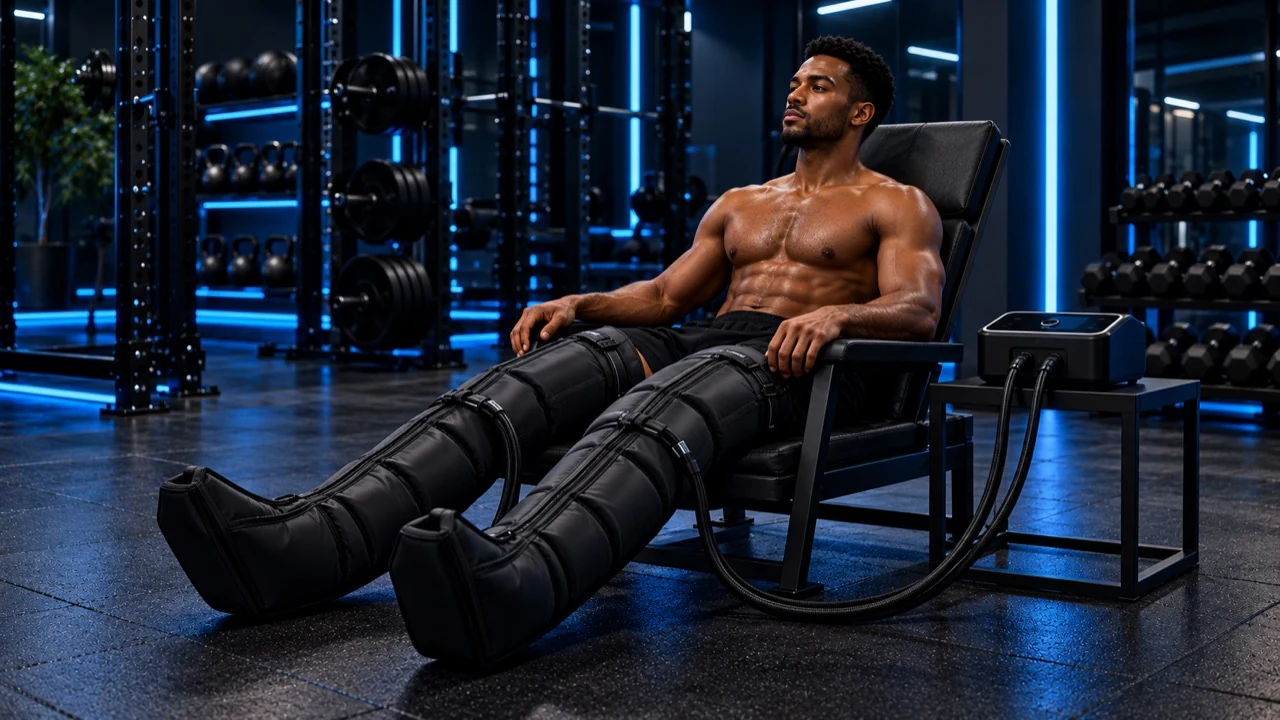
The practical take.
- What it may help with
- Consider an optional comfort tool for sore, heavy-feeling legs.
- What the evidence supports
- Possible modest soreness relief is better supported than faster restoration of strength or power.
- Joel’s approach
- Start shorter at a comfortable device-approved setting. My session examples are not an established optimal dose.
Can squeezing your legs actually help you recover faster? Here’s what the science says.
You just finished a brutal squat session, heavy deadlifts, or a long competition day. Your legs are smoked, and you’ve still got training to do tomorrow.
That’s where compression boots like Hyperice Normatec come in.
These things look like oversized space boots, but there’s actual science behind them. The question is whether they improve recovery or just make your legs feel good.
How do they work?
Compression boots use something called intermittent pneumatic compression (IPC). Basically, air chambers inflate and deflate, squeezing your legs from the feet upward.
Think of it as a mechanical massage that helps move blood and fluid through your legs.
Potential benefits include:
- Improved circulation: Helps move blood and fluid through the legs.
- Reduced muscle soreness: Some studies show less post-workout soreness.
- Less heavy-leg feeling: Some people find the squeeze comfortable. Reduced post-exercise swelling hasn’t been established by the cycling study linked below.
- Better perceived recovery: Athletes sometimes report feeling fresher after using them.
What does the science say?
A 2024 systematic review and meta-analysis found that compression boots may modestly reduce muscle soreness, but they don’t consistently improve strength, power, or athletic performance. Its 17 studies used varied protocols, and the small effects on muscle mechanical function were not statistically significant.
Another study involving heavy resistance training reported exploratory soreness effect sizes and a clearer flexibility difference favoring compression. But soreness had no significant group or group-by-time effect, and the study did not establish faster strength recovery.
A 2024 cycling study in 16 trained adults found better perceived recovery after compression, without significant improvements in leg water or subsequent cycling performance.
And a 2026 placebo-controlled trial in 23 elite U19 soccer players found no recovery benefit after a single session. That result concerns youth soccer and that specific protocol; it doesn’t settle every question for strength athletes.
Here’s the catch: Feeling recovered and actually being physically recovered aren’t always the same thing.
These boots aren’t magically rebuilding muscle fibers or adding 50 pounds to your squat. But if they help your legs feel better between hard sessions, there’s value in that.
My recommended protocol
Here’s how I’d incorporate compression boots into a strength athlete’s recovery routine.
Optional examples, not an established optimal dose. Start with a shorter session and the lowest comfortable setting allowed by your device’s instructions. Pressure levels vary between devices; don’t copy another boot’s level or a study’s pressure.
After heavy training
- Duration: 20–30 minutes as an optional example, if your device’s instructions allow it and shorter sessions are comfortable.
- Timing: After your workout, when convenient. The first hour hasn’t been shown to be superior.
- Pressure: A comfortable squeeze within the manufacturer’s instructions; never painful.
- Frequency: As needed after demanding lower-body sessions.
Before training or competition
- Duration: An optional 10–20 minutes for comfort, only if consistent with your device’s instructions.
- Pressure: Low and comfortable, using your device’s own guidance.
- Goal: See whether your legs feel looser. This doesn’t replace a progressive warm-up or promise better performance.
During heavy training blocks
- Duration: The same optional 20–30-minute example, after establishing that shorter use is comfortable.
- Frequency: As needed; daily use isn’t required or proven better.
- Who might consider it: Strongman, powerlifting, weightlifting, and athletes competing over multiple days who find it comfortable.
These are practical starting points, not scientifically established optimal doses. Research hasn’t determined the perfect pressure, timing, or frequency.
More pressure isn’t necessarily better. You want a comfortable squeeze, not your legs getting crushed.
Open the compression therapy recovery guide for the session examples, safety notes, and research in the Movement Library.
Are they worth it?
If you’re training hard five or six days a week, competing regularly, or constantly dealing with heavy, sore legs, compression boots might be a worthwhile addition.
But don’t confuse recovery tools with recovery fundamentals.
Sleep, calories, protein, hydration, and proper programming still do the heavy lifting.
Compression boots won’t fix terrible sleep or inadequate nutrition.
And if you have a history of blood clots, significant circulation problems, or certain heart conditions, get medical clearance before using them.
Read your device’s contraindications first. NormaTec’s manufacturer instructions require physician consultation before use with conditions including DVT, acute thrombophlebitis, pulmonary edema, acute heart failure, infection, and wounds, tumors, fractures or dislocations near the treatment area. Don’t use boots to self-treat unexplained pain or swelling.
Stop the session and release the pressure before opening the boots if you experience pain, numbness, or unusual symptoms; follow the device’s emergency-release instructions and seek medical advice as needed. Compression boots here are an optional comfort tool, not a treatment for a medical condition.
The bottom line
Compression boots are a legitimate recovery tool, but they’re not magic.
The best evidence supports possible modest soreness relief and improved feelings of recovery. The evidence that they actually restore strength or power faster is much weaker.
My approach? If you’ve got access to them, start shorter and follow the device’s instructions. If that feels good, 20–30 minutes after a brutal training session is one optional example to try and see how you respond.
Just don’t expect them to replace the basics.
Train hard. Recover intelligently. Come back stronger.
— Joel Dircks
Grip & Grub | Iron Library
Research & References
- Maia et al. (2024). Effects of lower-limb intermittent pneumatic compression on sports recovery: A systematic review and meta-analysis. Biology of Sport.
- Haun et al. (2017). Does external pneumatic compression treatment between bouts of overreaching resistance training sessions exert differential effects on molecular signaling and performance-related variables compared to passive recovery? PLOS ONE.
- Ferrer-Ramos et al. (2024). Intermittent sequential pneumatic compression reduces post-exercise hemodilution and enhances perceptual recovery without improving subsequent cycling performance. Sport Sciences for Health.
- Maia et al. (2026). Intermittent pneumatic compression does not improve post-match neuromuscular, biochemical or perceptual recovery in international-level youth soccer players: a randomized placebo-controlled trial. BMC Sports Science, Medicine and Rehabilitation.
Hyperice — NormaTec Elite safety instructions and contraindications