Training & Recovery
Sleep Banking: Don't Leave Your Recovery Until the Night Before
How Strength Athletes Can Prepare for Competition Week, Travel & a Bad Night's Sleep

The practical take.
- What it may help with
- Extra sleep opportunity before travel, early starts and competition nerves may help you arrive better rested. It cannot make you immune to sleep loss.
- What the evidence supports
- Research supports selected attention, fatigue and sport outcomes. The youth hockey trial did not significantly improve grip strength or jumping; more time in bed is not the same as more sleep.
- Joel’s approach
- Joel experiments with 30–60 extra minutes of sleep opportunity for one to two weeks, protects familiar routines and judges readiness during warm-ups. This is practical guidance, not a proven strength protocol.
You wouldn't wait until Friday night to cram in all the training you need for Saturday's strongman competition.
So why do we treat sleep that way?
You plan your attempts, pack your belt and chalk, figure out your food, and make sure the equipment is ready. Then you stay up half the night getting everything together and hope you sleep like a baby before the meet.
That's a pretty crappy recovery plan.
There's a strategy called sleep banking, and it's worth understanding before your next competition.
What the Hell Is Sleep Banking?
Sleep banking means giving yourself extra opportunity to sleep before a stretch when you expect sleep to be disrupted—travel, early weigh-ins, competition nerves, or a ridiculous start time.
It's different from trying to catch up after you've already been short on sleep.
You can't store sleep like creatine in your muscles, and one long night doesn't make you bulletproof. But building a better sleep routine beforehand can give you a little more room for a rough night.
Does the Science Actually Support It?
In a 2009 controlled study, 24 adults had either a week of 10-hour opportunities in bed or their usual sleep schedule (about seven hours in bed on average). They then went through severe sleep restriction.
The extended-sleep group had fewer lapses on attention tests and recovered some measures faster afterward.
That's interesting, but it was attention research, not a study showing bigger deadlifts.
A 2023 review of 25 athlete sleep-intervention studies also found sleep extension and naps among the more promising approaches for selected performance outcomes. Many successful extension programs increased actual sleep by roughly 46–113 minutes. The studies were small and varied quite a bit.
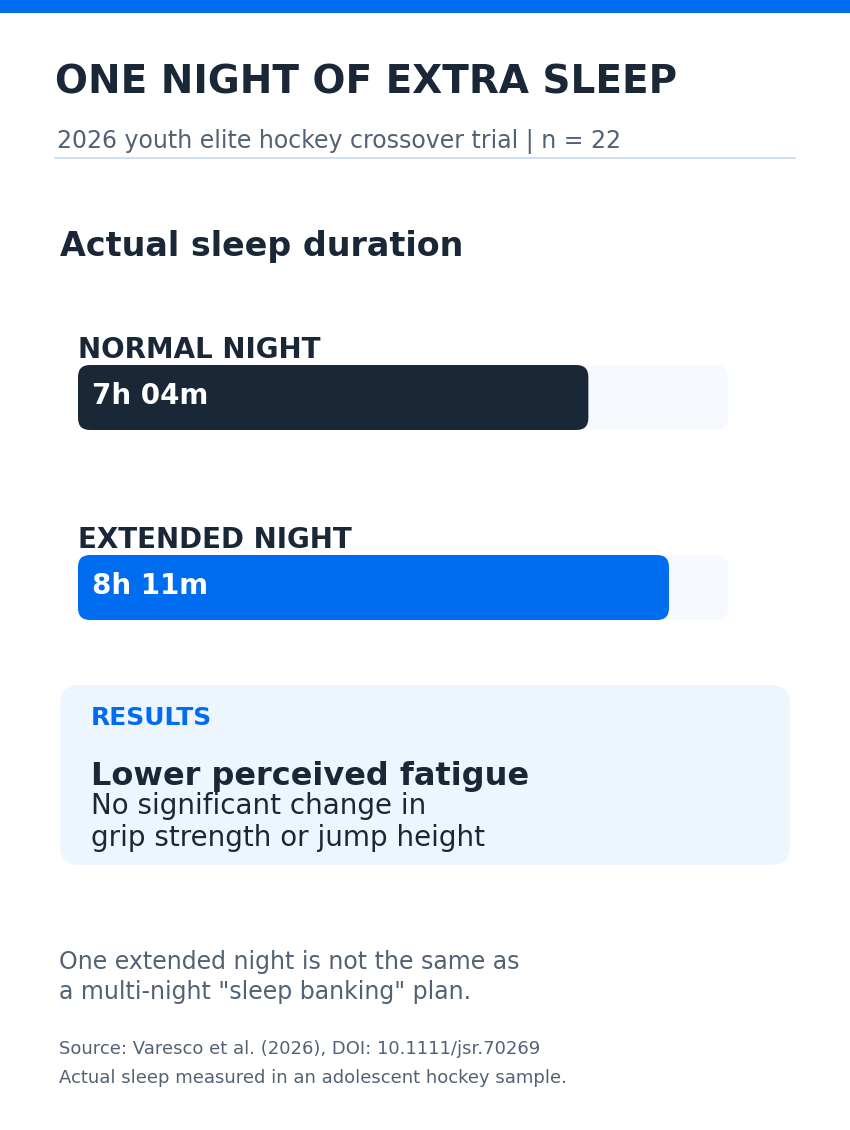
And here's the reality check: in a randomized study of 22 youth hockey players, about an extra hour of sleep reduced perceived fatigue and helped a demanding cognitive task. Grip strength and jumping didn't significantly improve.
Better rested? Maybe. Guaranteed stronger? Not proven.
Read the graphic in text
Varesco et al. (2026): a randomized crossover study in 22 elite youth hockey players tested one extended-sleep night. Actigraphy-measured mean actual sleep was 424 minutes (7 hours 4 minutes) under normal sleep and 491 minutes (8 hours 11 minutes) under extension. Bars begin at zero on a nine-hour scale.
The extended night reduced perceived fatigue. Grip strength and jump height did not significantly improve. These are sleep-duration averages in adolescent hockey athletes, not prescribed time in bed, not a powerlifting trial and not a multi-night sleep-banking protocol.
Don't Panic Over One Bad Night
Competition nerves are real. In a survey of 283 elite Australian athletes, 64% said they'd slept worse before an important competition at least once in the previous year.
That doesn't mean one bad night automatically ruins your meet. But it doesn't mean sleep loss never matters, either.
If you did a decent job with your sleep leading up to the event, don't lie there at 2 a.m. convincing yourself your squat is doomed. Stick to your routine, show up, warm up, and see how you're actually moving.
A lousy night isn't a prediction of a lousy total.
How Much Extra Sleep Should You Aim For?
I'd start by trying to create another 30–60 minutes of sleep opportunity each night for about one to two weeks before a major competition—especially if you normally cut sleep short.
That's a practical starting experiment, not a proven magic dose. And more time in bed doesn't guarantee more actual sleep.
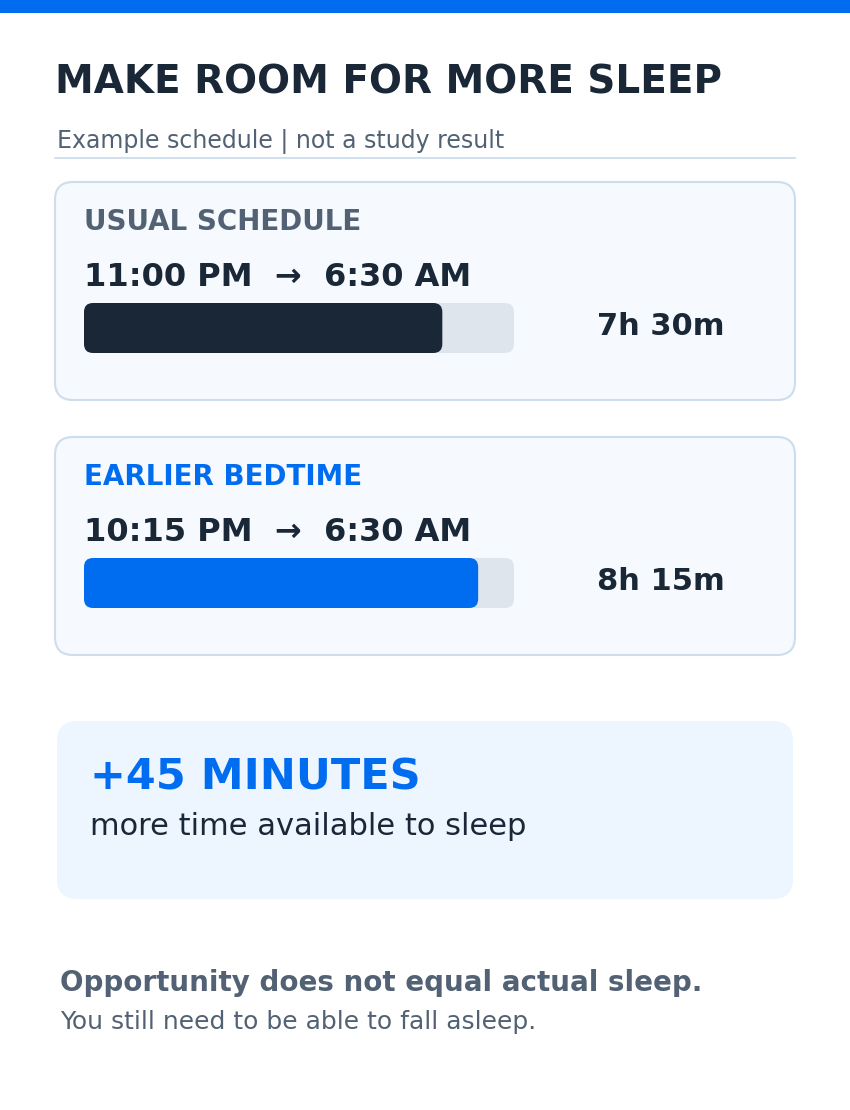
For example, moving bedtime from 11 p.m. to 10:15 p.m. while keeping a 6:30 a.m. wake-up gives you 45 extra minutes of opportunity. If you just lie there awake, you haven't gained 45 minutes of sleep.
Read the graphic in text
Illustrative schedule, not a study result: usual bedtime 11:00 p.m., wake-up 6:30 a.m. gives 7 hours 30 minutes in bed. Moving bedtime to 10:15 p.m. with the same wake time gives 8 hours 15 minutes in bed.
That is 45 extra minutes available to sleep, not a guaranteed 45-minute increase in actual sleep. More time in bed helps only if you can actually sleep during it.
My Competition-Week Sleep Protocol
Here's how I'd handle it for a powerlifting meet, strongman event, or grip contest:
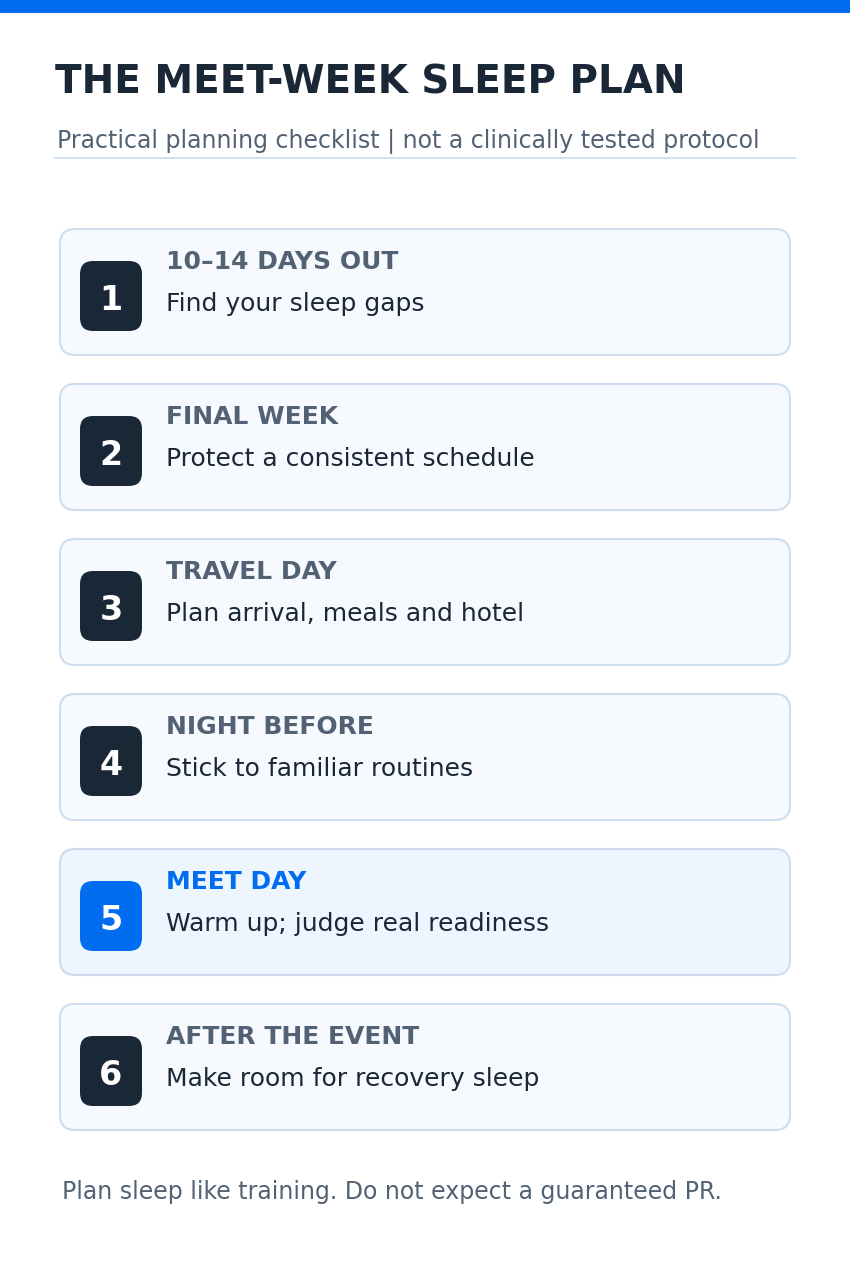
- 10–14 days out: Check your normal sleep schedule and find where you're losing time. Start moving evening tasks earlier if you need to.
- The final week: Aim for a consistent bedtime and wake-up time. Give yourself extra time to sleep instead of just setting an earlier alarm.
- Before traveling: Plan the drive, flight, hotel, meals, and weigh-ins. Don't turn a long travel day into an avoidable all-nighter.
- The night before: Stick with familiar routines. Don't start experimenting with a new sleep supplement because you're nervous.
- Competition day: Assess how you feel during warm-ups. Use your normal nutrition and caffeine strategy, not a panic dose of stimulants.
- Afterward: Get some quality sleep again. Banking sleep beforehand doesn't mean recovery is over after the last event.
Read the graphic in text
Practical planning checklist, not a clinically tested combined protocol: 1. Ten to fourteen days out, find your sleep gaps. 2. In the final week, protect a consistent schedule. 3. Before travel, plan arrival, meals and the hotel.
4. The night before, stick to familiar routines. 5. On meet day, warm up and assess real readiness. 6. After the event, make room for recovery sleep. Build sleep into the plan early; a single restless night does not predetermine your competition total or guarantee a personal record.
What About Naps and Jet Lag?
A short early-afternoon nap can be useful if you know it works for you. Just leave enough time to wake up before heavy lifting; rolling off the couch straight into a max deadlift isn't the plan.
And if you're crossing time zones, sleep banking and jet-lag management aren't the same thing. Extra sleep can help with fatigue, but getting your body clock aligned takes a separate plan involving sleep timing and light exposure.
The Bottom Line
We plan our training for weeks, sometimes months, leading up to a big event. Sleep deserves the same respect.
I'm not saying an extra hour in bed guarantees a PR. The research isn't there.
But if you know a meet is going to involve travel, nerves, and an early wake-up, why show up already running on fumes?
Train hard. Plan ahead. Bank the sleep you can. Show up ready to lift.
Research & References
- Rupp et al. (2009) — Banking Sleep Before Sleep Restriction
- Cunha et al. (2023) — Sleep Interventions and Athletic Performance: Systematic Review
- Varesco et al. (2026) — One-Night Sleep Extension in Youth Elite Hockey Players
- Mah et al. (2011) — Sleep Extension in Collegiate Basketball Players
- Juliff et al. (2015) — Sleep Disturbance Before Important Competitions
- Janse van Rensburg et al. (2021) — Managing Travel Fatigue and Jet Lag in Athletes
- Walsh et al. (2021) — Sleep and the Athlete: Expert Consensus
General education for athletes, not individualized medical advice.