Training & Recovery
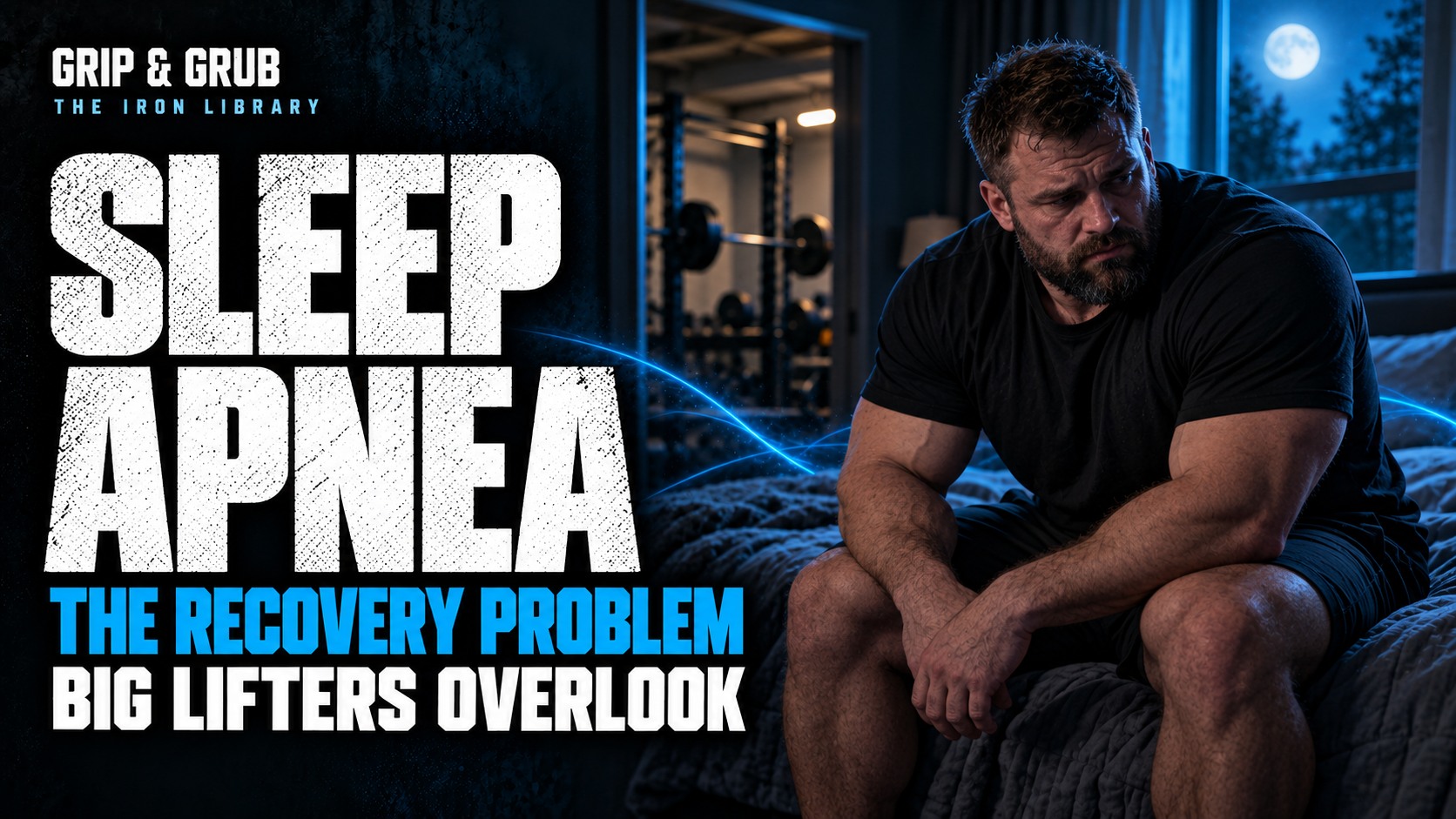
Sleep Apnea: The Recovery Problem Big Lifters Overlook
Why Eight Hours in Bed Doesn't Always Mean Eight Hours of Recovery
The practical take.
- What it may help with
- Interrupted breathing can fragment sleep even when an athlete spends enough time in bed. Persistent symptoms deserve professional evaluation.
- What the evidence supports
- One football cohort found OSA in 18 of 52 complete home tests; this is not a measured rate for strength athletes. Exact effects on maximal strength and muscle growth remain unestablished.
- Joel’s approach
- Joel takes snoring, gasping and unrefreshing sleep seriously, seeks appropriate testing and follows clinician-guided treatment. A wearable cannot reliably diagnose or exclude OSA.
You can be built like a damn refrigerator, train five days a week, eat your protein, and do everything you're supposed to do for recovery.
But what if you're spending eight hours in bed and your breathing keeps getting interrupted all night?
That's what makes sleep apnea worth talking about, especially for bigger strength athletes. You can be in great shape and still have a problem with how you breathe while sleeping.
What's Actually Happening?
Obstructive sleep apnea (OSA) happens when your upper airway repeatedly narrows or closes during sleep. Breathing can become shallow or temporarily stop, oxygen levels may drop, and your brain may briefly wake you enough to get breathing going again.
You might not even remember those interruptions.
The result? You can spend eight or nine hours in bed and still wake up feeling like you got hit by a truck.

Read the graphic in text
Upper-airway tissue can partially or completely block airflow during sleep. Breaths can weaken or pause; oxygen may fall.
Brief arousals can interrupt sleep continuity, and events may recur through the night. Not every event causes a measurable oxygen drop, and symptoms vary.
This is a conceptual explanation, not a diagnostic test or a measured timeline.
Being Big and Strong Doesn't Make You Immune
A large neck, high body weight, and certain airway characteristics can raise concern about sleep apnea. But a muscular athlete's BMI doesn't tell the whole story, and a big neck alone doesn't mean you have OSA.
Here's an interesting study: In 2025, researchers tested collegiate football players. Among 52 players with complete three-night home-test data, 18 (about 35%) had findings consistent with mild-to-moderate sleep apnea.
That's one team, not every football player—and definitely not a measured sleep-apnea rate for strongmen or powerlifters. But it's enough to make you pay attention.

Read the graphic in text
In Trikha et al. (2025), 52 Colorado State University football players had complete three-night home-test data: 18 met the mild-to-moderate OSA threshold and 34 did not. Eighteen of 52 is about 35%.
Fifty-eight players completed at least one night, but six lacked all three nights. Tests were performed at roughly 5,000 feet altitude.
This is one small selected team, not a prevalence estimate for all strength athletes and not a diagnostic test for readers.
Signs You Shouldn't Brush Off
- Loud, frequent snoring
- Someone noticing that you stop breathing or gasp in your sleep
- Waking up with headaches or a dry mouth
- Feeling exhausted even after a full night in bed
- Daytime sleepiness, poor concentration, or high blood pressure
Here's the tricky part: not everybody with sleep apnea feels sleepy during the day. And snoring by itself doesn't prove anything.
Is Sleep Apnea Killing Your Gains?
We know that sleep apnea can fragment sleep and put stress on the cardiovascular system. That can absolutely matter for how you feel and function day to day.
But here's where I draw the line on the bro science: we don't have strong evidence that sleep apnea costs you a specific percentage of muscle growth or takes 50 pounds off your deadlift.
The concern is real. The exact impact on maximal strength and hypertrophy hasn't been established.
What About CPAP?
CPAP uses gentle air pressure to help keep your airway open while you sleep. For people diagnosed with OSA, appropriate positive-airway-pressure treatment can reduce breathing disturbances and improve excessive daytime sleepiness.
Is it some secret anabolic recovery hack? No. It's treatment for a medical condition—not a supplement, and not a guaranteed PR booster.
And if you're prescribed it, the goal is to work with your sleep-care team on consistent use, mask fit, and whether treatment is actually effective. A smartwatch's sleep score isn't a substitute for proper testing.
My Athlete Action Plan
- Take the symptoms seriously. If you snore heavily, gasp at night, or feel unrefreshed despite enough time in bed, don't just write it off as hard training.
- Get evaluated. A healthcare professional can determine whether a home sleep apnea test or an in-lab sleep study makes sense.
- Don't self-diagnose with a wearable. A watch or ring can show patterns, but it cannot reliably rule OSA in or out.
- Follow through with treatment. If you are diagnosed, discuss evidence-based treatment options and troubleshoot problems rather than giving up on them.
- Keep the basics in place. Enough sleep, solid nutrition, smart training, and recovery still matter.
The Bottom Line
You can have the biggest squat in the gym and still have a problem getting restorative sleep.
I'm not saying every big lifter has sleep apnea. I'm saying being big and strong doesn't make you bulletproof.
We spend plenty of money on recovery gadgets, supplements, and everything else. If your breathing is being interrupted all night, that's worth addressing before chasing another recovery hack.
Train hard. Breathe well. Get your damn sleep.
Because recovery starts with actually being able to sleep.
Research & References
- Trikha et al. (2025) — Prevalence and Predictors of OSA in Collegiate Football Players
- Gomes et al. (2025) — Systematic Review of Sleep-Related Breathing Disorders in Athletes
- AASM (2017) — Diagnostic Testing for Adult Obstructive Sleep Apnea
- AASM (2019) — Positive Airway Pressure Treatment Guideline
- USPSTF (2022) — Obstructive Sleep Apnea in Adults: Screening
General education for adult athletes, not individualized medical advice.