
Training & Recovery
The Sauna Advantage: Heat, Recovery & Long-Term Health
A practical look at sauna, cardiovascular associations, heat exposure, relaxation, and the limits of strength-recovery research.
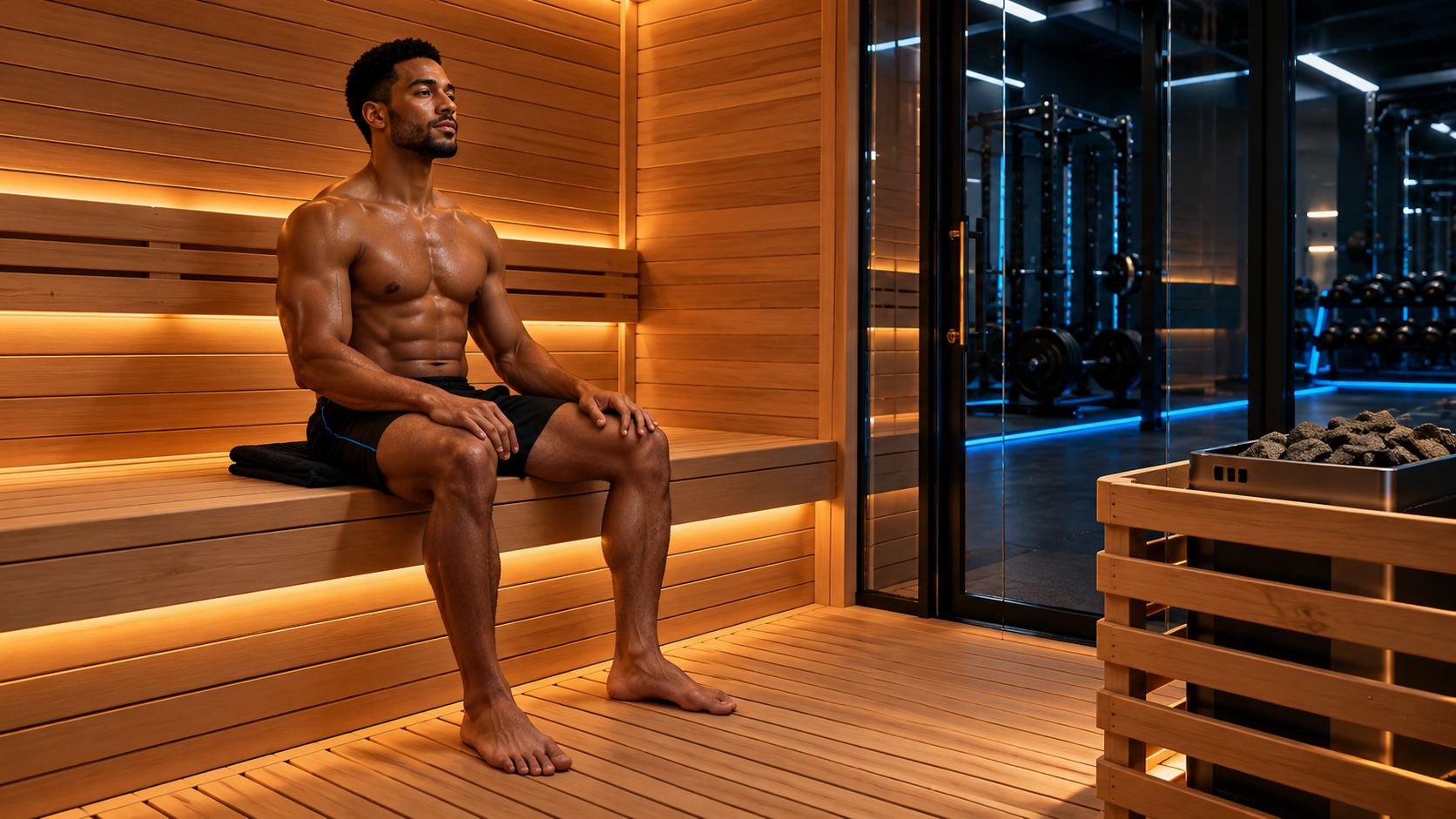
The practical take.
- What it may help with
- Explore heat exposure, relaxation and cardiovascular-health research.
- What the evidence supports
- Cardiovascular findings include observational associations; strength and recovery benefits remain uncertain.
- Joel’s approach
- My practical routine is an optional heat-exposure approach, with gradual acclimation and hydration. It is not a proven longevity dose.
We spend a lot of time talking about training, nutrition, and supplements. But one recovery tool that I think deserves more attention is the sauna.
Andrew Huberman's discussions led me to look more closely at heat-exposure research. Those discussions are a starting point; the studies themselves determine what we can say about outcomes.
I value sauna as a way to relax. Cardiovascular associations and physiological responses are interesting, but they do not promise better strength, faster recovery, or a longer life for an individual athlete.
Why should you care?
1. Better cardiovascular health
When you sit in a sauna, your heart rate increases, blood vessels dilate, and your cardiovascular system gets a little workout without beating up your joints.
Some long-term studies have linked frequent sauna use to significantly lower cardiovascular mortality. That's a pretty solid reason to spend 20 minutes sweating.
2. Recovery & relaxation
Heat increases blood flow and can help you feel less stiff and more relaxed after a hard training session.
Is it scientifically proven to eliminate soreness or accelerate muscle recovery? Not quite. The research is mixed. But if it helps you unwind and sleep better, that's a win in my book.
3. Heat shock proteins & growth hormone
Here's where things get a little bro-sciency.
Heat exposure activates something called heat shock proteins, which help protect and maintain proteins inside your cells.
Sauna use can also temporarily increase growth hormone levels.
Sounds anabolic, right?
Well, don't get too excited. A temporary growth hormone spike doesn't automatically mean more muscle growth. But these are interesting physiological responses that make sauna worth studying.
4. Potential longevity benefits
Research has associated regular sauna use with lower risks of cardiovascular disease and premature death.
It doesn't prove sauna makes you live longer, but the evidence is promising.
And personally, I'm all for anything that might help me keep lifting heavy when I'm 70.
The protocol: how to actually sauna
Here is the practical routine I use as a starting point, adjusted to heat tolerance. This is my routine, not a proven strength or longevity dose.
| Sauna setting | Recommendation |
|---|---|
| Sauna type | Traditional dry sauna |
| Temperature | 175–195°F (80–90°C) |
| Duration | 15–20 minutes |
| Frequency | 3–4 times per week |
| Best timing | After training or in the evening |
If you're new to sauna, start with 5–10 minutes and work your way up. You don't get extra gains for nearly passing out.
Infrared vs. traditional sauna
My pick: Traditional dry sauna.
Most of the research showing cardiovascular and longevity benefits comes from traditional Finnish-style saunas.
Infrared saunas typically run cooler, around 120–140°F, and you might spend 20–30 minutes inside.
Infrared is still an option if that's what you have access to, but we don't have the same depth of research showing equivalent benefits.
Steam rooms work too for heat exposure, but the humidity makes the heat much more intense. Don't try to match dry-sauna temperatures in a steam room.
When should strength athletes use it?
I would prioritize sauna after lifting or later in the evening, not before a heavy training session.
The last thing you need before heavy squats or deadlifts is unnecessary dehydration and fatigue.
After training, get some fluids in first, especially if you've already been sweating heavily.
And speaking of hydration, replace the water and electrolytes you lose. Getting dehydrated isn't a recovery strategy. If you're already depleted from training, skip the extra heat.
If you have a heart condition, problems with fainting, or a history of heat illness, get medical clearance first. And if you feel dizzy or nauseated, get out.
The bottom line
Sauna isn't going to replace good programming, eating enough protein, or getting eight hours of sleep.
But for 15–20 minutes a few times a week, you may be getting some cardiovascular benefits, heat adaptation, relaxation, and potentially better sleep.
That's a pretty good return on your time.
Lift heavy. Eat well. Recover hard. And don't overcomplicate it.