
Training & Recovery
Ice Baths for Strength Athletes: Recover Smarter, Not Colder
When cold-water immersion may help performance recovery, why routine post-lifting plunges can work against muscle growth, and how to use cold strategically.
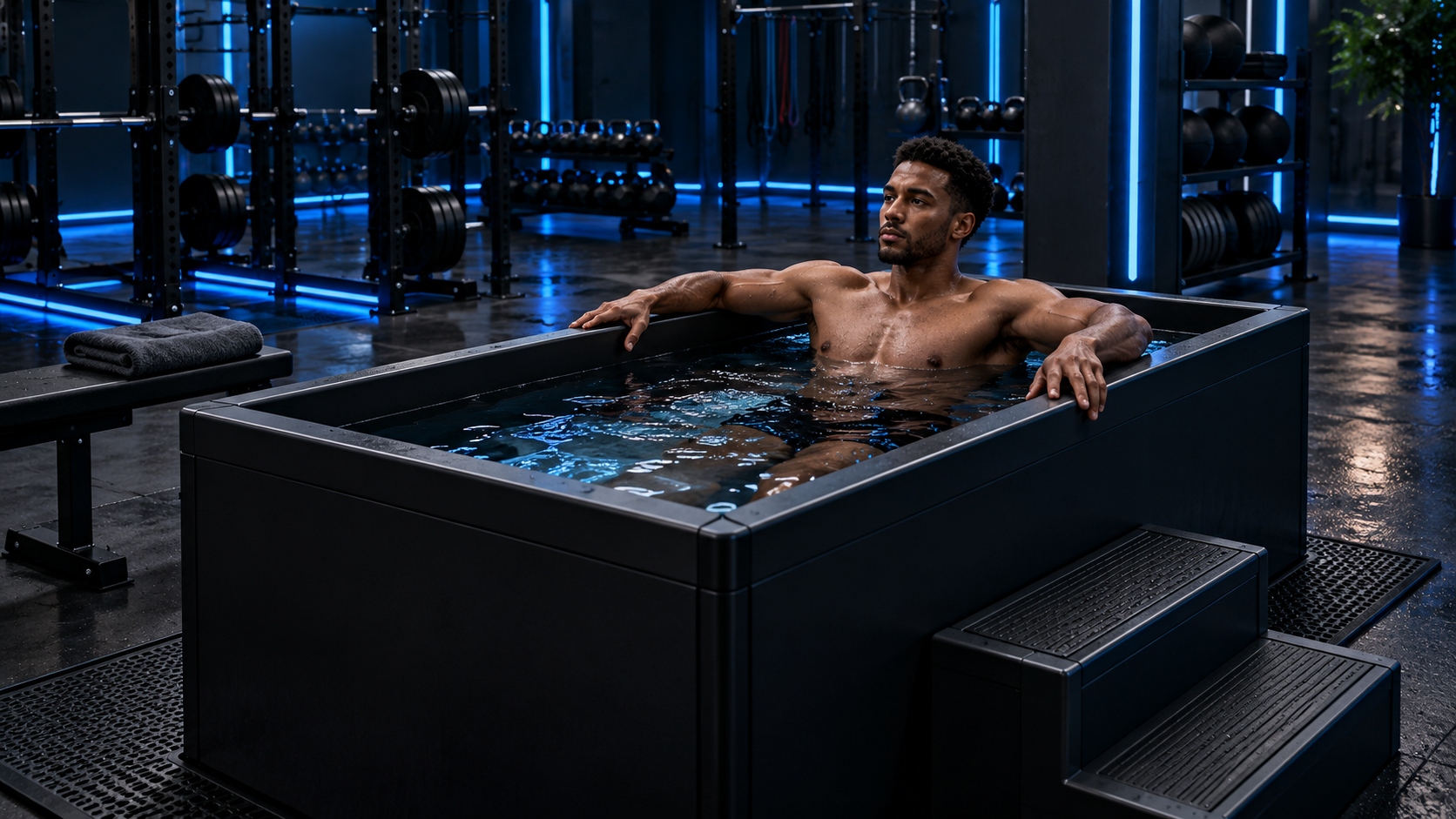
The practical take.
- What it may help with
- Manage soreness and perceived recovery when short-term competition performance matters.
- What the evidence supports
- Feeling recovered differs from restoring strength; regular immediate post-lifting immersion can work against hypertrophy.
- Joel’s approach
- Use cold strategically, start conservatively and keep optional plunges away from growth-focused lifting.
Sitting in freezing water doesn’t automatically make you stronger. Neither does filming yourself doing it.
I’m interested in whether it helps you perform—not whether you can outlast your buddy in a stock tank. For strength athletes, ice baths have a place. Just don’t confuse feeling recovered with building more muscle.
What are the actual benefits?
The biggest benefits are less muscle soreness, feeling more recovered, and potentially better recovery of explosive power after hard exercise. That can matter during a demanding competition weekend. But ice baths don’t reliably restore maximal strength faster, and they aren’t a muscle-building shortcut. Recovery meta-analysis.
Think of cold water as a tool for taking the edge off—not a repair shop that instantly rebuilds everything you just trained.
When should you use one?
During a muscle-building block: Don’t make an ice bath your automatic post-workout routine. Research suggests regularly plunging immediately after lifting can modestly reduce muscle growth. It doesn’t erase your workout, but I’m not interested in making hard-earned gains harder to get. Hypertrophy meta-analysis.
During competition: After finishing the day’s events, when you need to perform again tomorrow, the short-term recovery benefits may be worth that trade-off. Avoid plunging right before heavy or explosive work; performance can temporarily drop while you’re cooled down. Recovery and adaptation review.
What about waiting a few hours? Huberman recommends separating cold immersion from lifting by 6–8 hours or more. That’s a practical suggestion—not a proven “your gains are safe now” cutoff. Research hasn’t established an exact waiting period. My conservative call: save optional plunges for nonlifting days, or skip them when maximizing growth is the priority. Huberman Lab.
The temperature and time
For a healthy athlete already accustomed to cold water, a reasonable short-term recovery protocol is:
- Temperature: 50–59°F / 10–15°C. Start toward the warmer end. Near-freezing water isn’t required.
- Duration: One 10–15-minute immersion. This is a commonly studied recovery range, not a mandatory endurance test or a universally proven perfect dose.
- Frequency: Use it when there’s a reason. My recommendation is strategic use around demanding competitions—not a daily requirement after lifting. Recovery and adaptation review.
New to cold exposure? Start warmer and with much shorter exposures rather than forcing the full protocol. There’s no trophy for ignoring your body. Huberman Lab.
And Huberman’s popular 11 minutes per week? That’s a general cold-exposure recommendation, largely discussed around metabolic effects—not an established weekly dose for strength-athlete recovery. Huberman Lab.
Don’t make it a toughness contest
Enter gradually, keep your head above water, and never combine immersion with hyperventilation or breath-holding. Have someone nearby. Get out for dizziness, chest discomfort, uncontrolled breathing, or severe shivering; dry off and warm up. Cold can sharply increase heart rate and blood pressure, so get medical clearance first with heart, blood-pressure, or circulation problems. Huberman Lab.
My bottom line: Use the cold to help you show up when performance matters. Don’t turn it into another workout you have to win.
Research & References
- Impact of Cold-Water Immersion Compared with Passive Recovery Following a Single Bout of Strenuous Exercise — Systematic review, meta-analysis and meta-regression (2022).
- Throwing cold water on muscle growth — Systematic review and meta-analysis of postexercise immersion and resistance-training hypertrophy (2024).
- Strategic Application of Post-exercise Cold-Water Immersion to Enhance Performance Recovery and Adaptation — Umbrella review; overall evidence certainty is low to very low (2026).
- Huberman Lab: The Science & Use of Cold Exposure for Health & Performance — Practical recommendations, distinct from a proven strength-recovery dose.
- Huberman Lab: Using Deliberate Cold Exposure for Health and Performance — Podcast discussion of cold exposure, metabolism and performance.