
Nutrition & Supplements
Urolithin A: Better Mitochondria, Better Performance?
The Science Behind Cellular Energy, Muscle Endurance, and Healthy Aging
The practical take.
- What it may help with
- Explore emerging research on muscular endurance and mitochondrial-health markers.
- What the evidence supports
- Small human trials show some encouraging endpoints without consistent improvements in maximal lifts or overall function.
- Joel’s approach
- Keep the basics in place and treat this as emerging evidence, with studied amounts distinguished from a proven athlete protocol.
After years of competing in strength sports, I’ve learned that building strength is one thing. Maintaining it as we get older is another. We spend plenty of time worrying about muscles, protein, and recovery, but what about the tiny engines inside our muscle cells?
That’s where Urolithin A comes in. It’s getting attention for its potential to improve mitochondrial health, muscle endurance, and healthy aging. But is it actually worth adding to your supplement stack?
What is Urolithin A?
Urolithin A is a compound produced when certain gut bacteria break down nutrients found in pomegranates, walnuts, and berries.
Its biggest claim to fame is supporting mitophagy, the body’s process of breaking down and recycling damaged mitochondria. Much of the mechanistic evidence comes from laboratory and animal research; human trials have not established that this translates into better performance for every athlete.
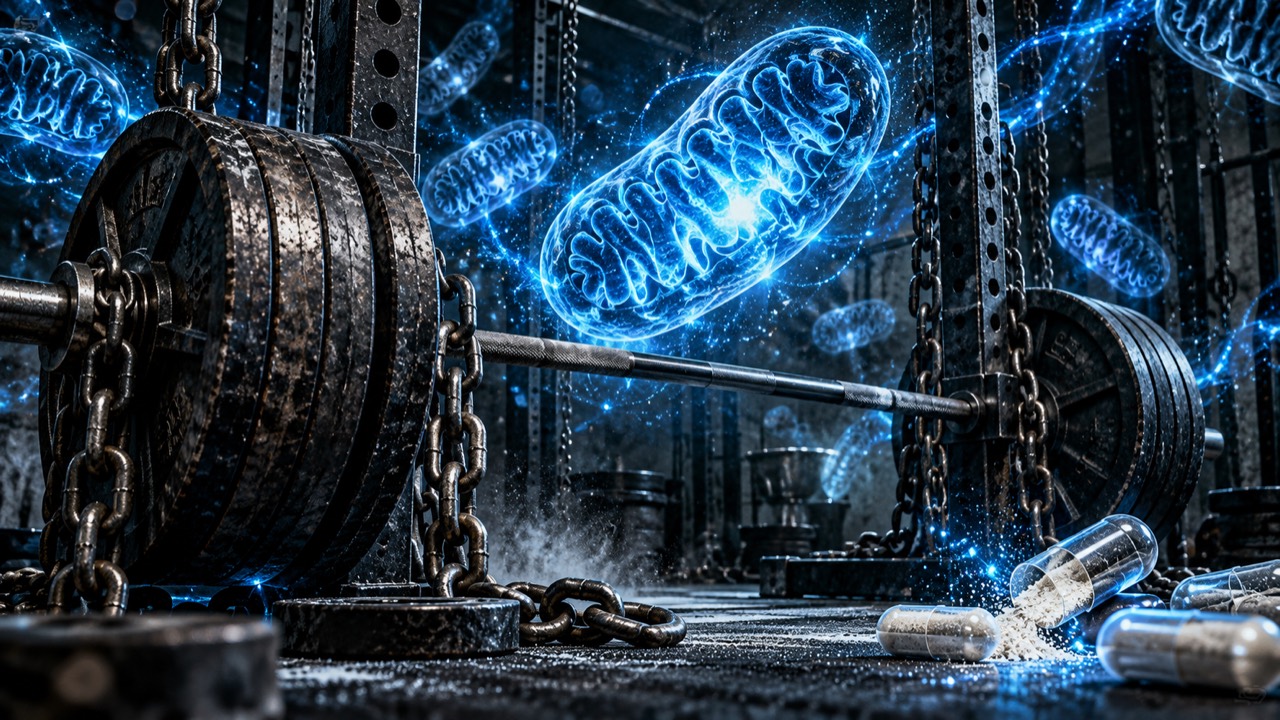
Think of mitochondria as the engines inside your muscle cells. Over time, some become less efficient. Mitophagy is basically your body’s maintenance crew, helping clear out worn-out equipment.
The interesting part? Not everyone has the gut bacteria needed to produce meaningful amounts of Urolithin A from food. Supplementation offers a more consistent way to obtain it.
What are the benefits?
Research suggests Urolithin A may offer several benefits:
- Muscle endurance: May improve how long muscles can work before fatigue.
- Mitochondrial health: May influence cellular pathways and biomarkers involved in maintaining healthy mitochondria.
- Inflammation: Some studies have shown improvements in inflammatory markers.
- Healthy aging: May help support muscle function as we get older.
Here’s where things get interesting for lifters.
A 2024 study involving 20 resistance-trained men found that taking 1,000 mg daily for eight weeks improved certain measures of muscular endurance and isometric strength compared with placebo.
However, their maximum bench press and squat strength did not improve significantly compared with placebo.
Research in older adults has also shown improvements in muscle endurance, but larger physical performance tests haven’t consistently demonstrated significant benefits. In that trial, the primary six-minute walk and maximal ATP-production outcomes did not significantly improve over placebo.
A 2026 review of five randomized trials found that the overall evidence is still limited.
Translation: Urolithin A looks promising for muscular endurance and mitochondrial health, but we can’t call it a proven muscle-building or strength supplement yet.
How much should you take?
Here’s the practical breakdown based on human studies:
- Dosage: 500–1,000 mg daily has been studied, with several performance trials using 1,000 mg.
- When: Morning or evening. No proven advantage to taking it before or after training.
- With food? No established requirement. Follow the product instructions.
- How long? Research has examined daily supplementation for approximately 4–16 weeks.
- Training days only? Studies used consistent daily supplementation, not just workout days.
There’s no established optimal dose or protocol for strength athletes.
Is it safe?
Human studies have generally found Urolithin A well tolerated at the doses tested, with no major safety concerns identified during short-term trials.
However, long-term safety data are limited, and we don’t have enough research on medication interactions, pregnancy, or years of continuous supplementation.
The bottom line
I’m always interested in supplements that might help us train harder, recover better, and maintain strength as we age.
Urolithin A is interesting because it’s not another stimulant or pre-workout. It’s targeting something deeper: the health and maintenance of the cellular machinery that helps keep our muscles working.
But it’s not a shortcut to bigger lifts, and there’s no proof it extends human lifespan.
My take: If you’ve already got your training, protein, creatine, nutrition, and sleep dialed in, Urolithin A is worth keeping an eye on. The early research is promising, especially for endurance and aging muscle.
Just don’t expect a bottle of it to add 50 pounds to your deadlift.
Build the muscle. Fuel the engine. Keep it running.
— Joel
Research & References
- Zhao et al. (2024). Assessment of Urolithin A effects on muscle endurance, strength, inflammation, oxidative stress, and protein metabolism in male athletes with resistance training: an 8-week randomized, double-blind, placebo-controlled study. Journal of the International Society of Sports Nutrition.
- Liu et al. (2022). Effect of Urolithin A Supplementation on Muscle Endurance and Mitochondrial Health in Older Adults: A Randomized Clinical Trial. JAMA Network Open.
- Dao et al. (2026). Effects of Urolithin A supplementation on muscle health outcomes in humans from randomized controlled trials. Frontiers in Nutrition. Systematic review and meta-analysis.
- Huberman Lab — Dr. Rhonda Patrick: The Best Vitality & Health Protocols (March 23, 2026). Podcast discussion and background.
Educational content only. Supplementation should be considered in the context of individual health, medications, and professional medical guidance.