Nutrition & Supplements
Taurine: More Strength, Faster Recovery, or Just Energy Drink Hype?
Is taurine doing anything for your lifts—or is it just another ingredient riding shotgun with caffeine?
The practical take.
- What it may help with
- A possible small benefit in selected exercise tests; recovery findings remain mixed.
- What the evidence supports
- Performance evidence is low to very low certainty. Clinical-marker changes and animal lifespan findings do not prove stronger lifts or longer human life.
- Joel’s approach
- Get training, food, sleep and creatine handled first. Studied taurine doses are research context, not a universal recommendation.
Most lifters know taurine because they've seen it on an energy drink can. Which makes it easy to assume it's another stimulant that'll have you bouncing off the walls before a heavy squat session.
Here's the funny part: taurine isn't caffeine. It's a compound your body already uses in your muscles, heart, brain, and eyes. So I dug into the research to see whether taking more of it actually helps us train harder or recover faster.
What Is Taurine?
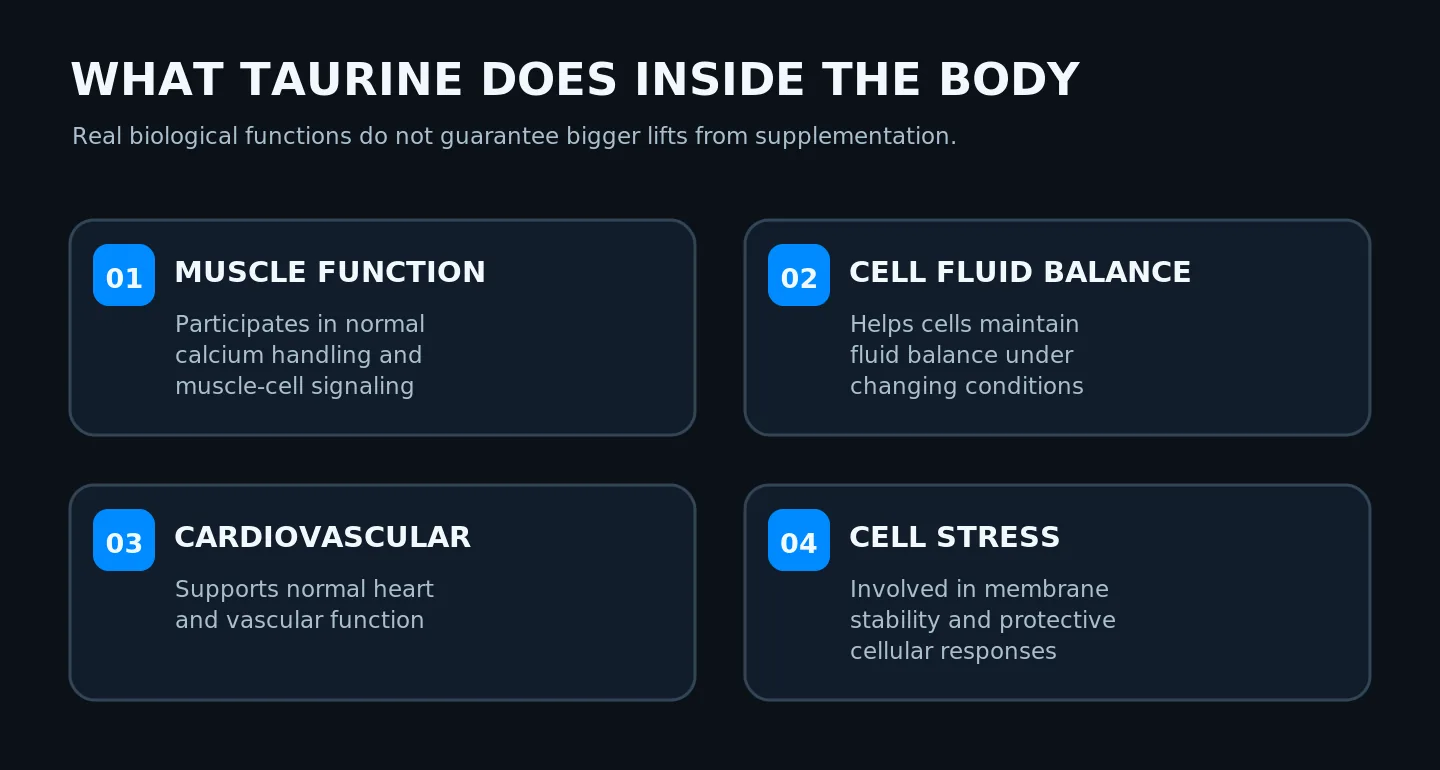
Taurine is a sulfur-containing compound your body makes naturally, and you also get it from meat, fish, and shellfish. It helps with calcium handling in muscle, cell-fluid balance, and normal cardiovascular function.
In gym terms, taurine is more like part of your body's maintenance crew than a shot of rocket fuel. Those roles are real—but that doesn't automatically mean scooping extra taurine gets you another plate on the bar.
Read this graphic as text
Taurine participates in muscle calcium handling and signaling, helps regulate cell-fluid balance, supports normal heart and vascular function, and is involved in membrane stability and cellular stress responses. A mechanism is not a proven supplement outcome.
Does It Actually Improve Strength or Performance?
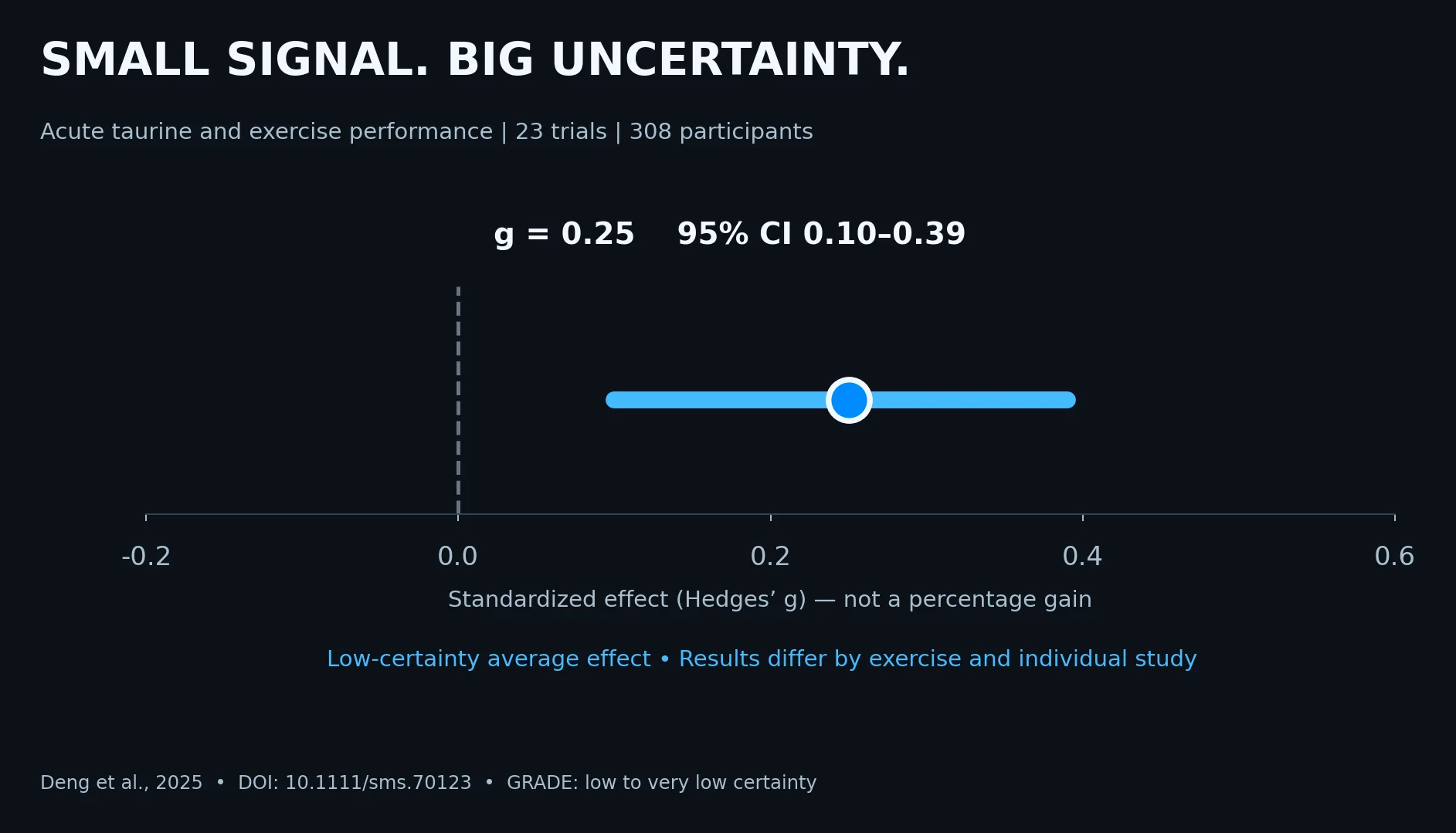
A 2025 review of 23 randomized trials involving 308 people found a small overall exercise-performance benefit. The pooled standardized effect was 0.25. Some strength, power, and endurance tests looked promising, but the researchers rated the evidence low to very low certainty.
That 0.25 is a statistical effect size—not a 25% boost to your deadlift. And a 2026 trial in trained men found that taurine by itself didn't significantly improve the performance tests, even though taurine combined with caffeine helped on certain measures.
My translation: taurine might help with some explosive or demanding efforts. But there is no good evidence that it'll turn your 500-pound deadlift into 550, and we still don't have strong direct trials in strongman events.
Read this graphic as text
The pooled standardized effect was Hedges’ g 0.25, with a 95% confidence interval from 0.10 to 0.39. This is not a 25% performance gain. Heterogeneity was 61%, results varied by task and study, and several sensitivity analyses weakened subgroup findings.
Can It Help Recovery?
Maybe. A 2025 review of seven small trials suggested possible improvements in certain soreness and muscle-damage measurements, but results were inconsistent and the studies varied a lot.
Here's something I always watch for: lower muscle-damage markers on a blood test don't necessarily mean your muscles recovered faster or that you'll be stronger in the next session. Taurine is interesting, not a proven shortcut around sleep, food, or smart programming.
What About Heart Health?
This might be taurine's more interesting angle outside the gym. A 2026 meta-analysis of 34 randomized trials found modest average improvements in blood-pressure and metabolic markers. Systolic blood pressure fell about 4.4 mmHg and diastolic about 2.5 mmHg versus control groups.
That's worth investigating, especially for general health. But those were different adult populations, not a study proving taurine prevents heart attacks or gives healthy lifters a stronger heart.
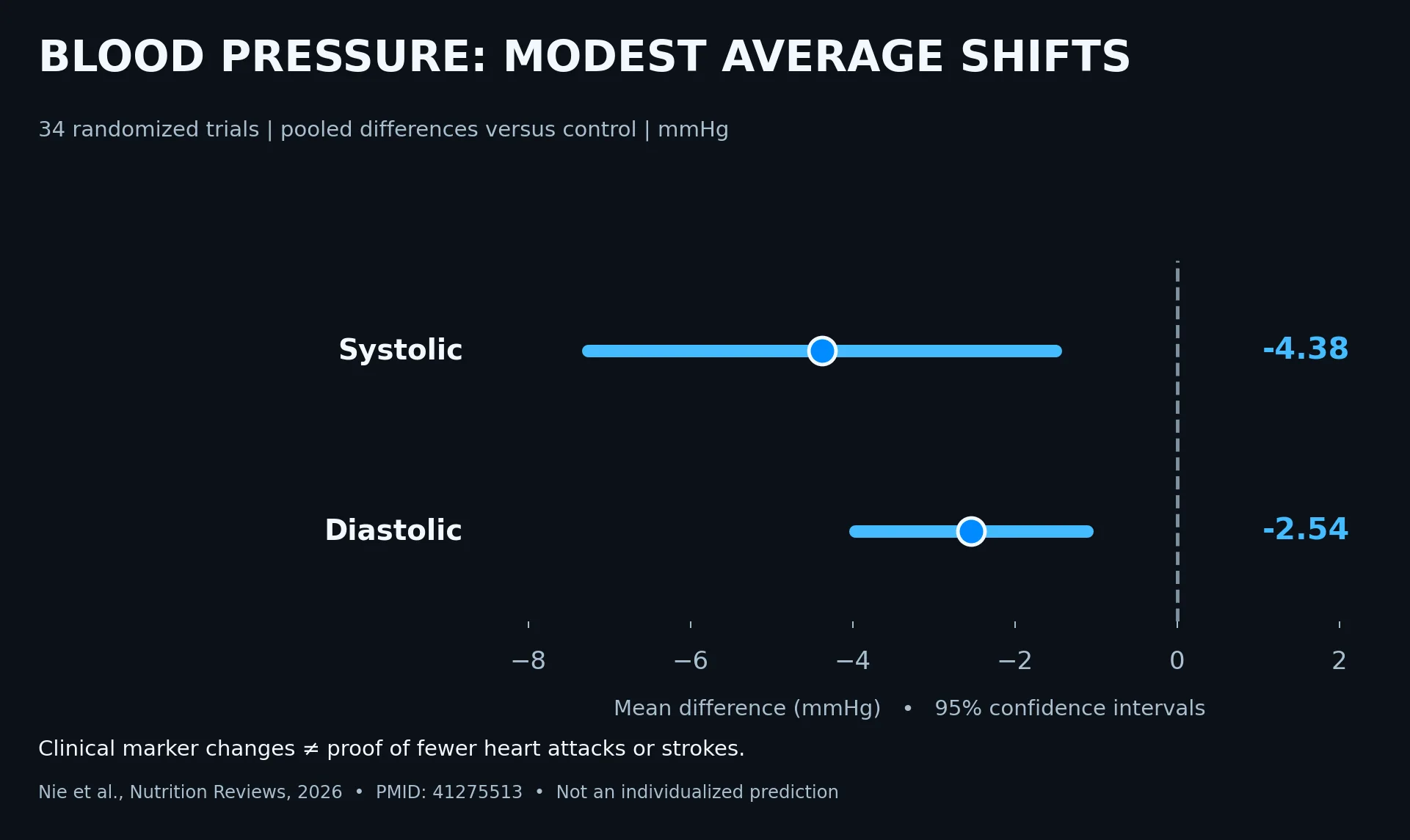
Read this graphic as text
Systolic blood pressure: −4.38 mmHg (95% CI −7.26 to −1.50). Diastolic blood pressure: −2.54 mmHg (95% CI −3.97 to −1.11). The review included 34 randomized trials overall; individual outcomes pooled different subsets. These averages are not individual predictions or athlete-specific results.
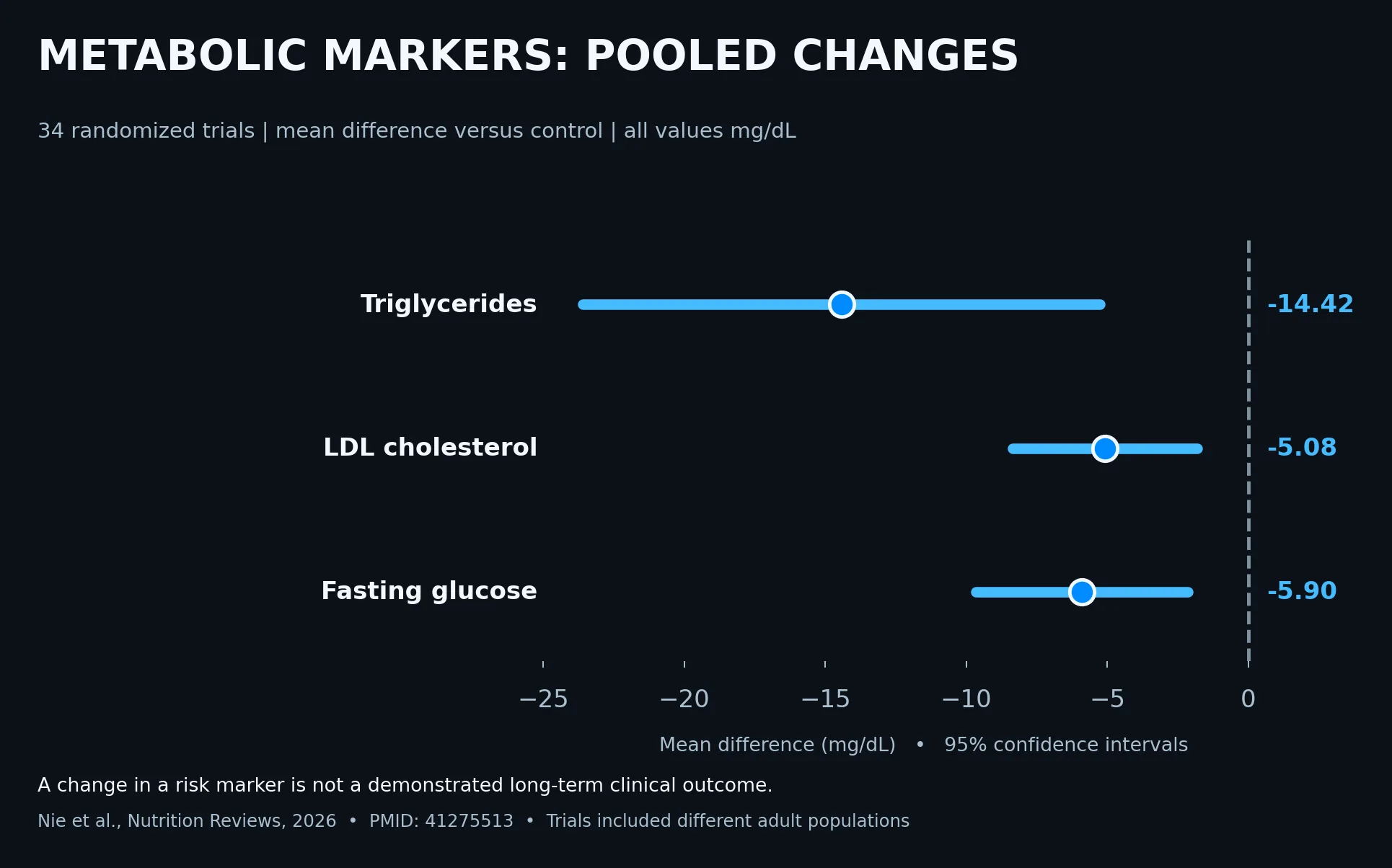
Read this graphic as text
Triglycerides: −14.42 mg/dL (95% CI −23.60 to −5.25). LDL cholesterol: −5.08 mg/dL (95% CI −8.35 to −1.81). Fasting blood glucose: −5.90 mg/dL (95% CI −9.65 to −2.15). These are pooled biomarker changes, not proof of disease prevention or guaranteed changes for a healthy lifter.
Is Taurine an Anti-Aging Supplement?
This story got interesting fast. A 2023 animal study reported longer lifespans in mice given taurine. Naturally, that turned into headlines about a new longevity supplement.
Then NIH researchers in 2025 found that blood taurine levels didn't consistently fall with age across the groups they studied. That challenges the idea that everybody becomes taurine-deficient as they get older.
The mouse results are worth studying. They are not proof that taurine helps humans live longer. Nobody's found an anti-aging cheat code in an energy drink.
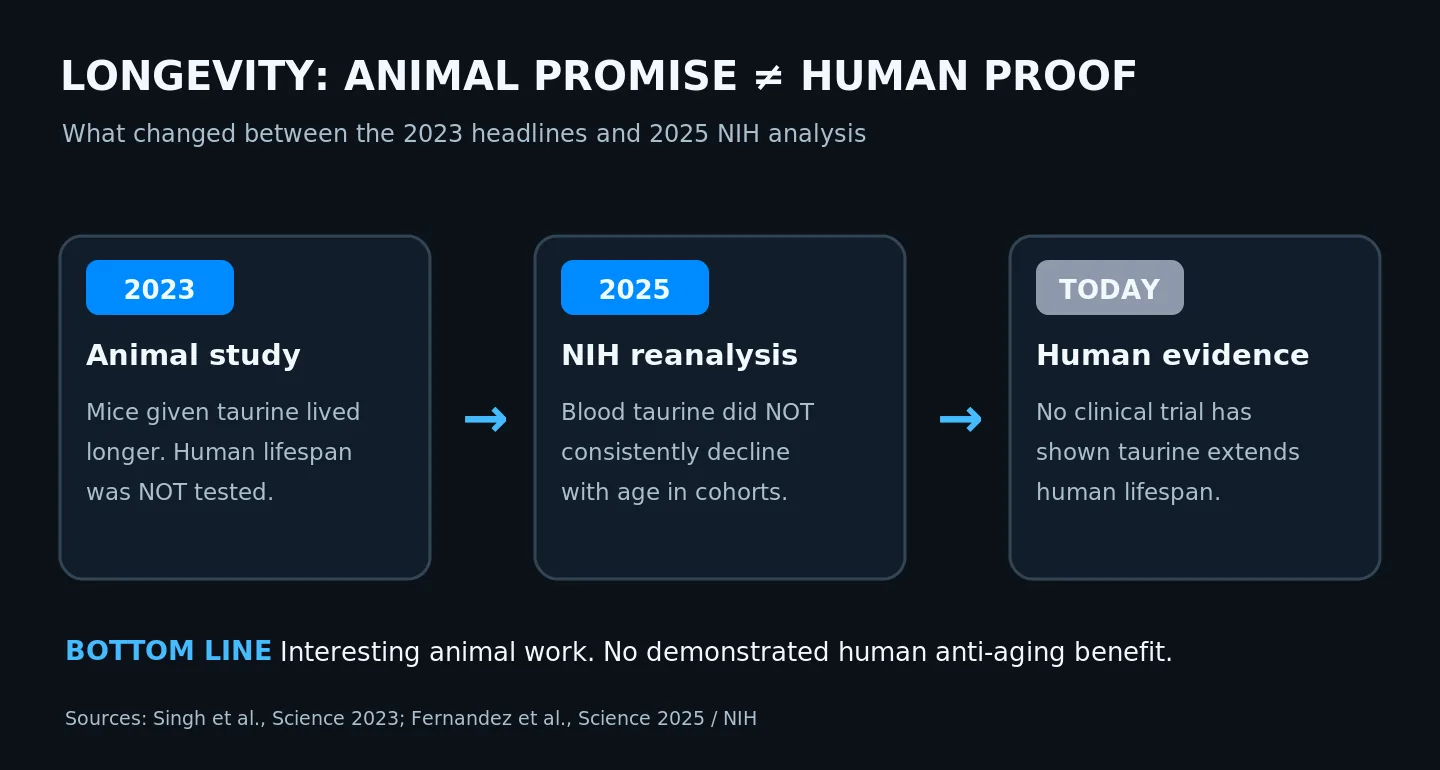
Read this graphic as text
In 2023, an animal study reported longer lifespan in taurine-supplemented mice; human lifespan was not tested. In 2025, NIH-led research found circulating taurine often stayed stable or increased with age across cohorts. It was a separate biomarker investigation, not a human supplementation lifespan trial.
Taurine vs. Caffeine: What's in That Energy Drink?
Caffeine is the ingredient with much stronger evidence for giving you an immediate bump in alertness and certain aspects of performance. Taurine is not a stimulant. One standard 250 mL Red Bull, for example, contains about 1,000 mg taurine and 80 mg caffeine.
Some newer research suggests combining them may help certain performance tests, but we haven't proven taurine consistently adds something beyond caffeine alone. And if your energy drink destroys your sleep, the recovery math isn't looking too good.
Athlete Action Plan: Dose, Timing & Safety
- Know the research range: Single-dose exercise studies have tested roughly 1–6 grams, often about 60–120 minutes before exercise. That is not a proven optimal dose or a recommendation for everyone.
- Don't assume more is better: The 2025 review found no reliable dose-response relationship across those amounts.
- Skip the automatic stack: There is no convincing reason you must combine taurine with creatine, beta-alanine, or caffeine. Creatine has a much stronger foundation for strength athletes.
- Check your labels: Count taurine and caffeine from energy drinks, pre-workouts, and powders instead of blindly stacking servings. Third-party testing matters.
- Think about safety: Taurine was generally tolerated in short-term trials, but long-term high-dose safety is uncertain. It may matter if you have kidney disease or take medications affecting blood pressure or glucose—get individualized guidance first.
- Measure results, not hype: If supplementation is appropriate for you, track repeatable training outcomes rather than trusting that a supplement feels productive.
My Take
Taurine isn't useless. It's just not magic. I think the research is worth following for certain performance tests, recovery, and cardiovascular markers. But I'm not calling it a must-have for lifters, and I'm definitely not selling it as a proven longevity supplement.
If your training, food, sleep, and creatine aren't handled, adding another powder probably isn't the missing piece.
The label might promise more. The barbell is where you find out.
Train hard. Recover harder. Let the science do the talking.
— Joel
Research & References
- Huberman Lab (2021). Tools for Managing Stress & Anxiety — personal taurine/energy-drink discussion. Read source
- Deng et al. (2025). Acute taurine and exercise performance: 23-trial meta-analysis. Read source
- Köse et al. (2026). Taurine, caffeine, and combined supplementation in trained men. Read source
- He et al. (2026). Caffeine–taurine co-supplementation meta-analysis. Read source
- Taurine recovery meta-analysis (2025). Seven randomized trials and muscle-damage markers. Read source
- Nie et al. (2026). Taurine and cardiometabolic risk factors: 34-trial meta-analysis. Read source
- Singh et al. (2023). Taurine deficiency as a driver of aging. Animal lifespan evidence. Read source
- Fernandez et al. (2025). Is taurine an aging biomarker? NIH-led study. Read source
- NIH (2025). Taurine is unlikely to be a reliable aging biomarker. Read source
- Red Bull official ingredients page. Taurine and caffeine amounts in a standard 250 mL can. Read source
This article is educational, not personalized medical advice. Research reviewed through November 1, 2026.